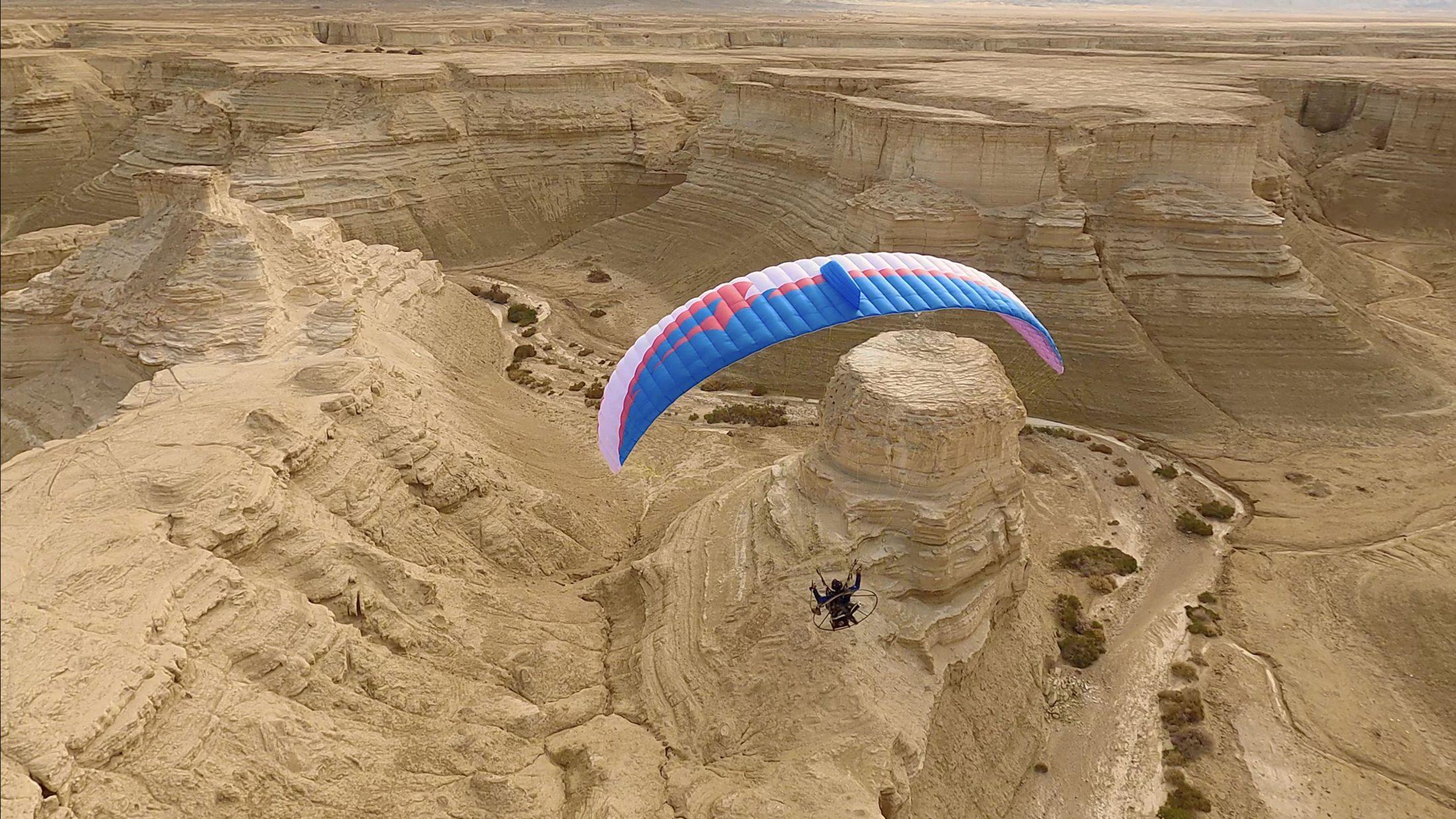
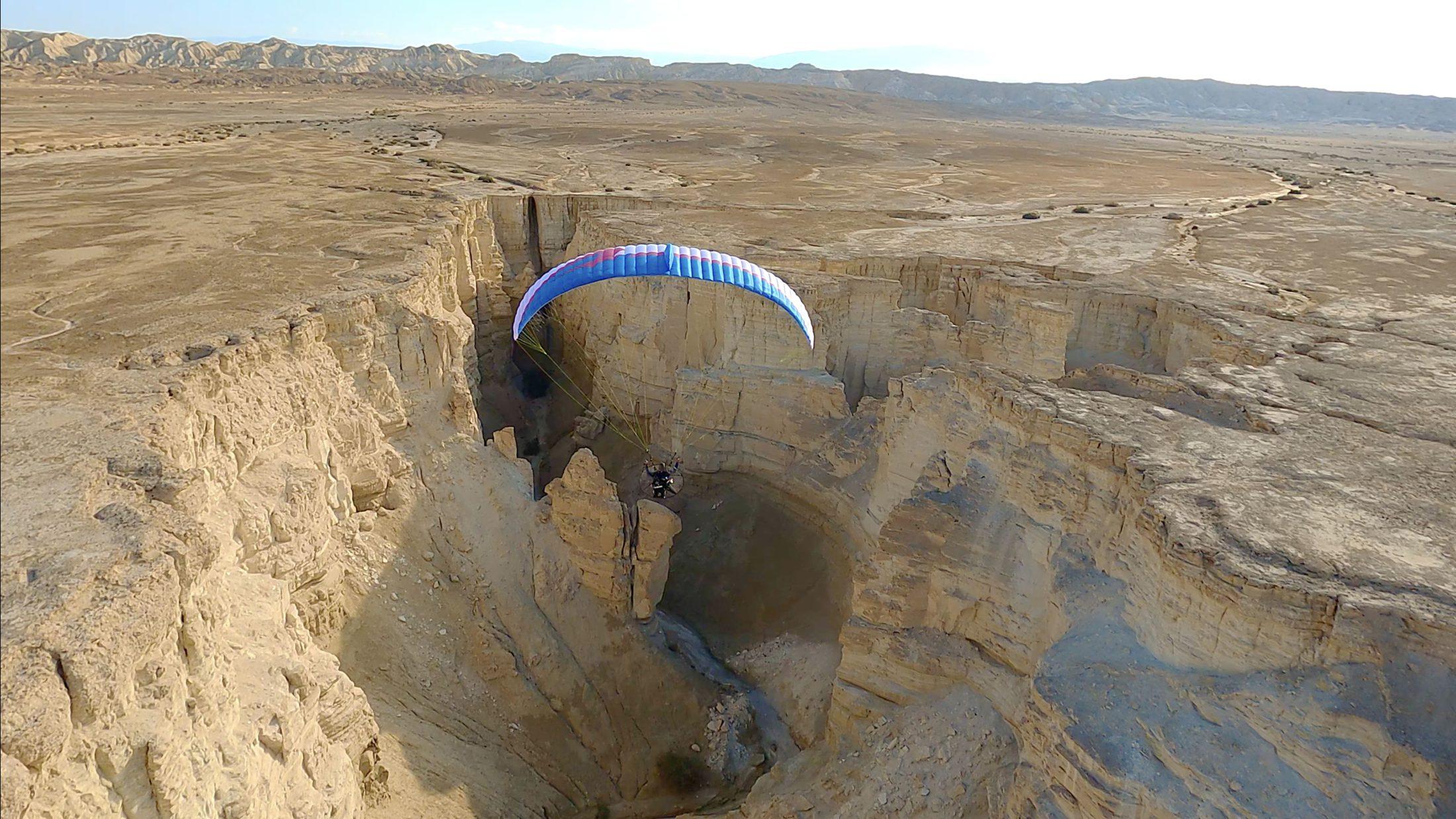
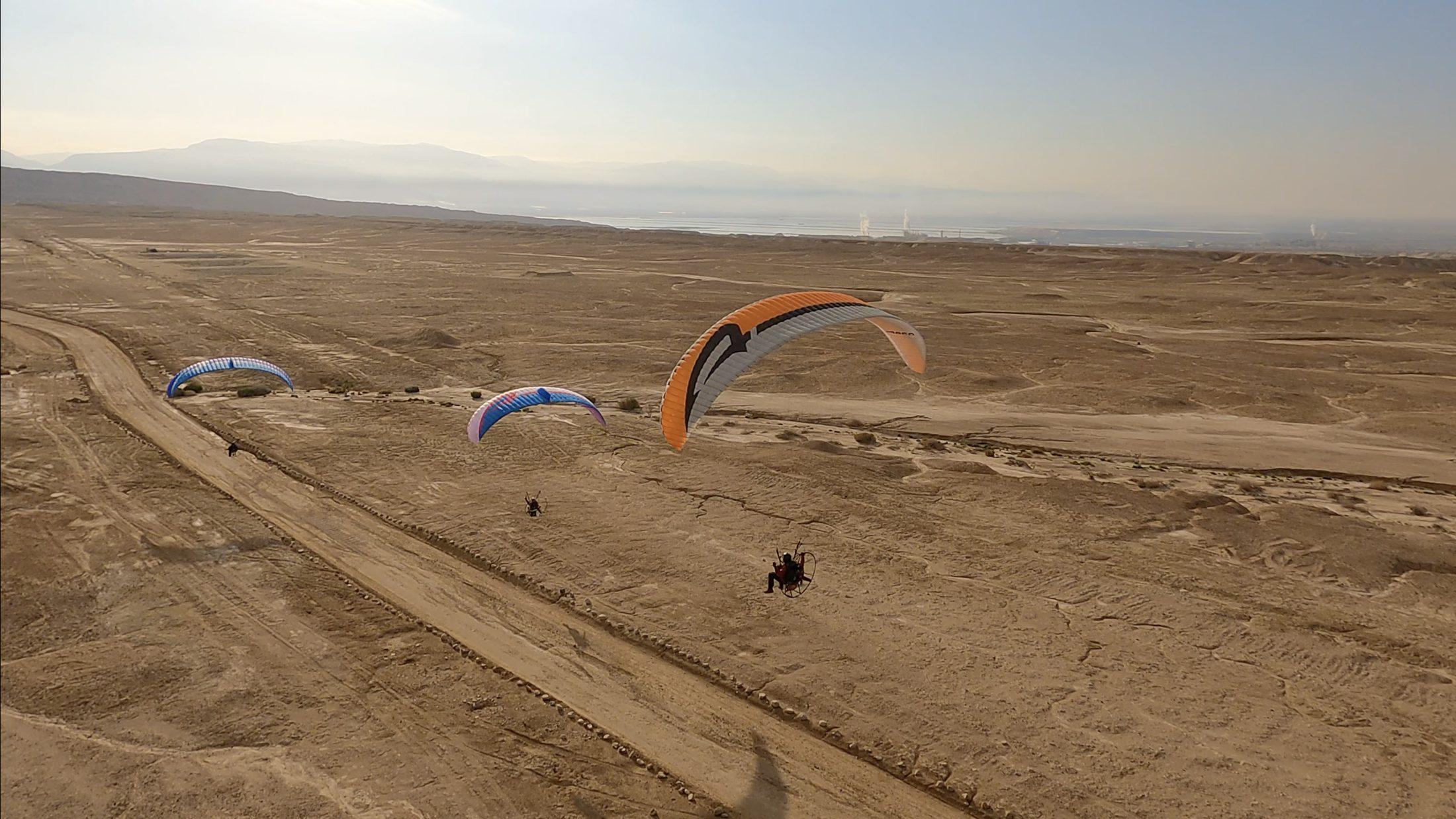
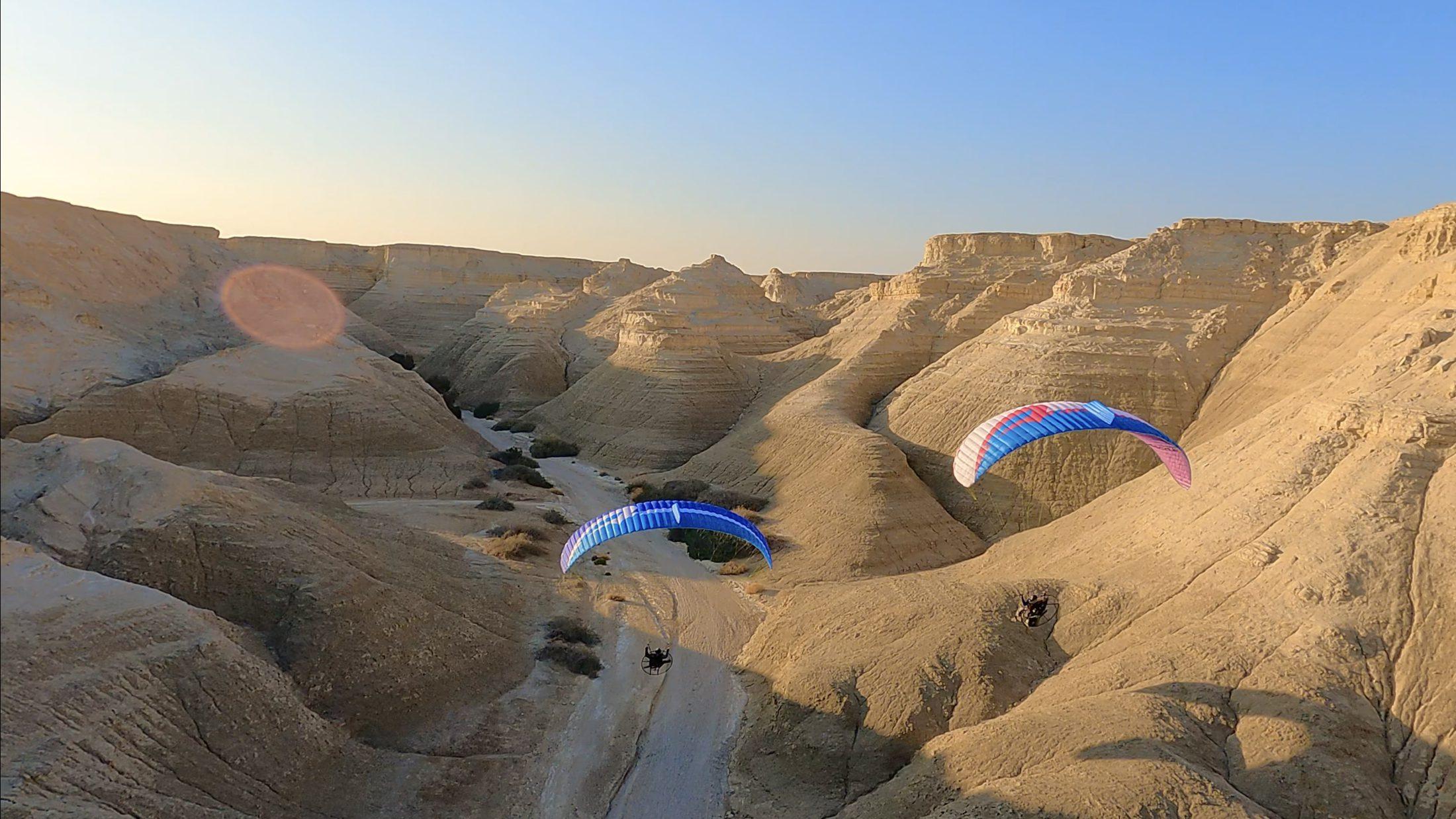
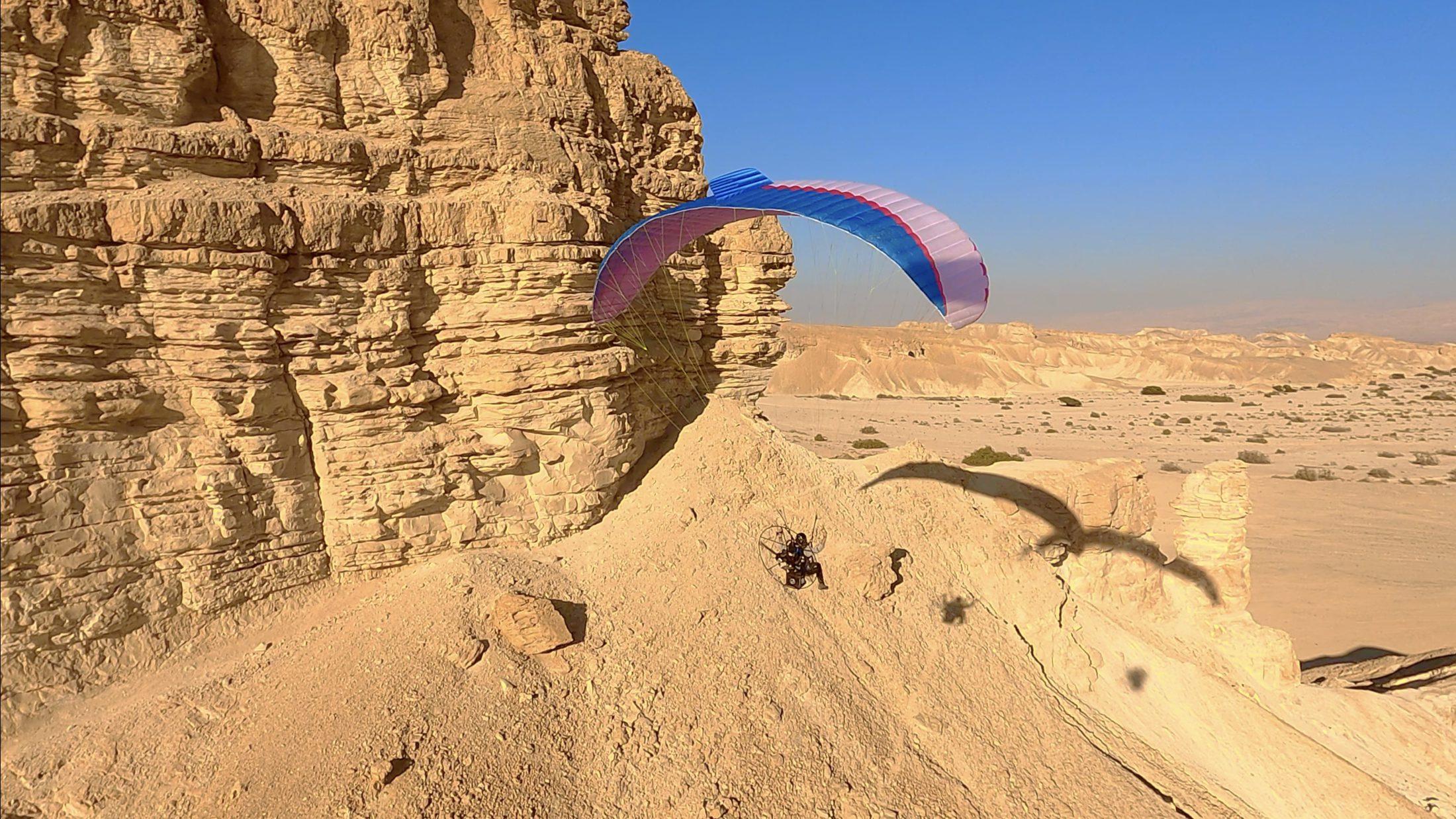
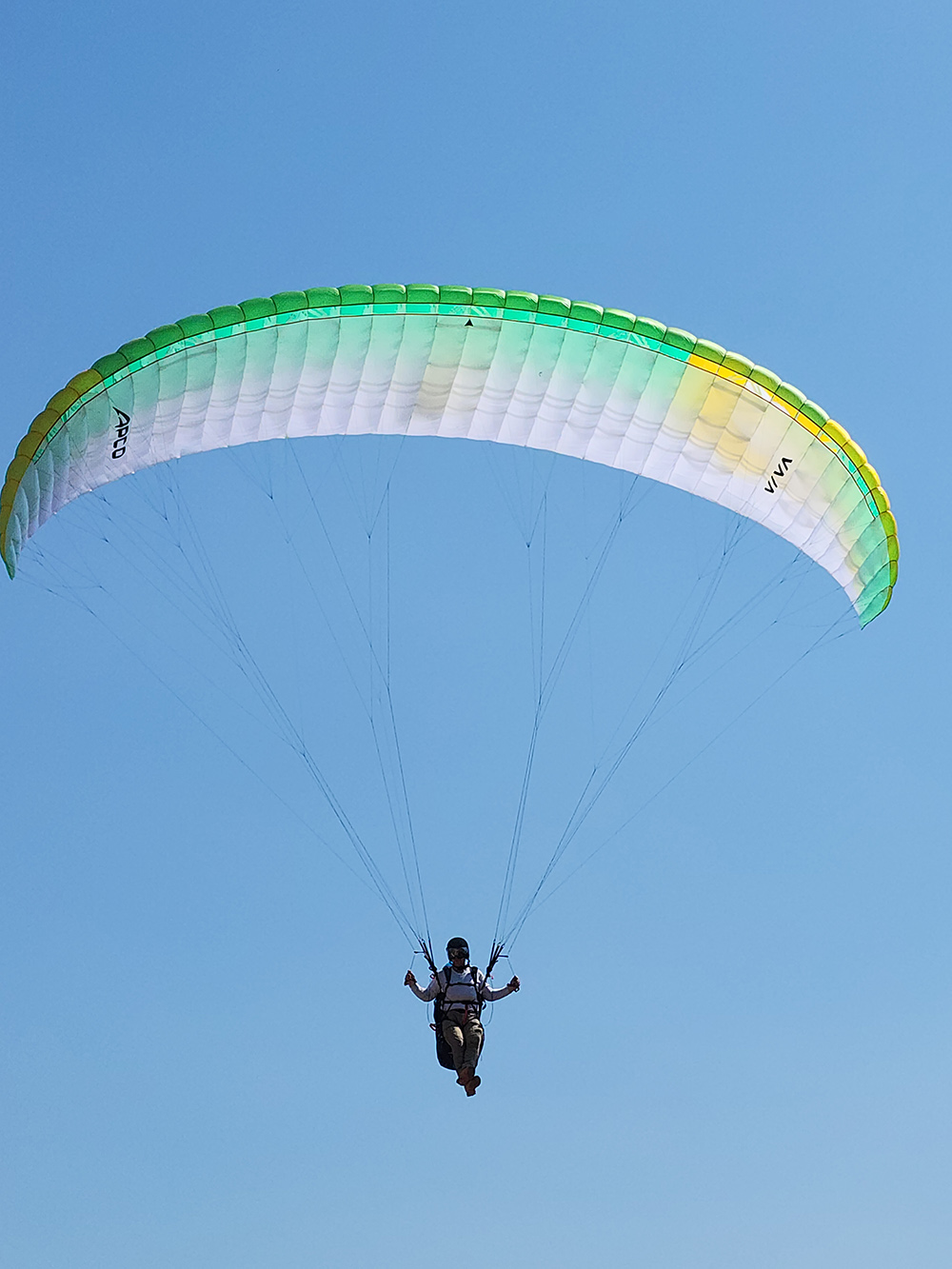
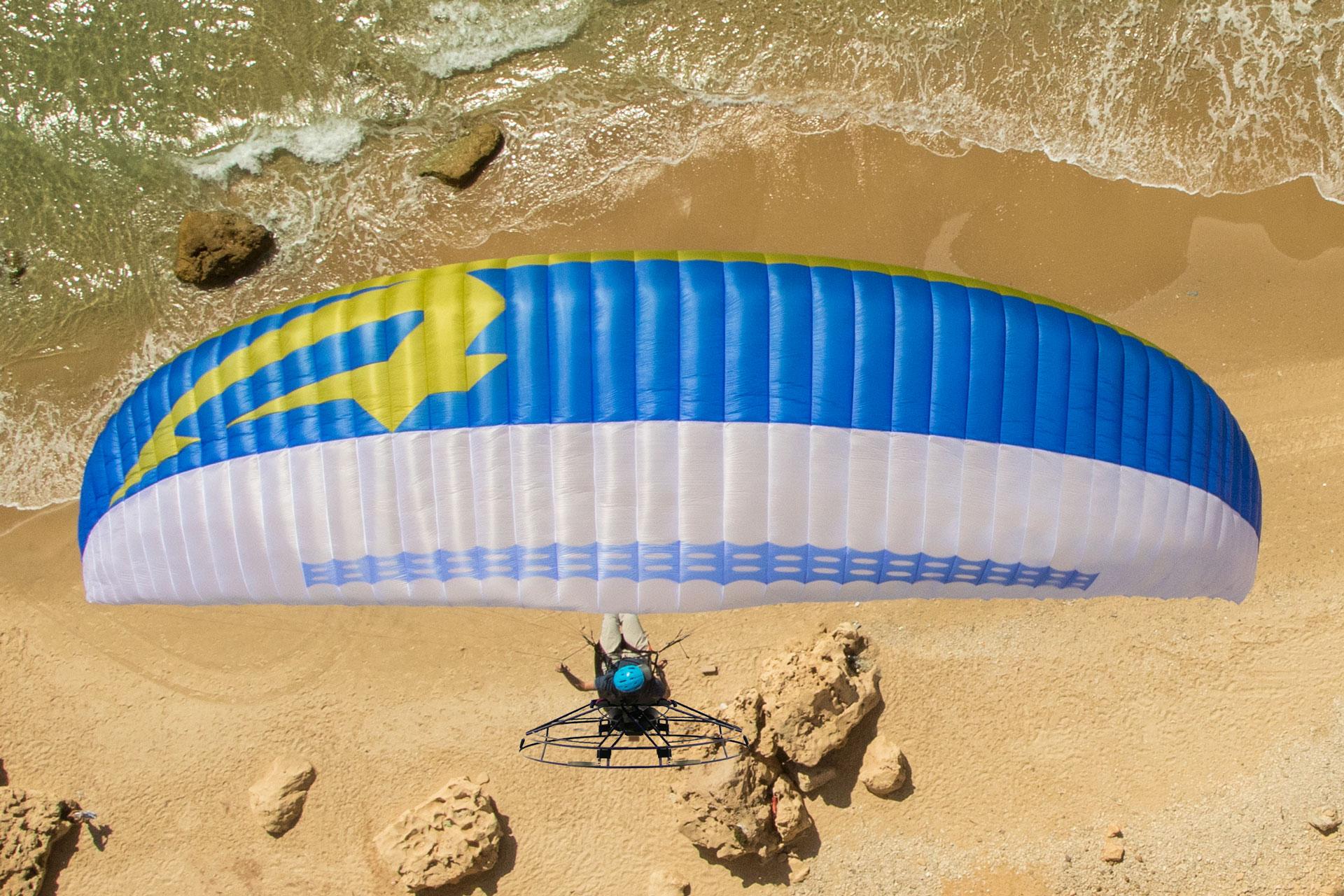
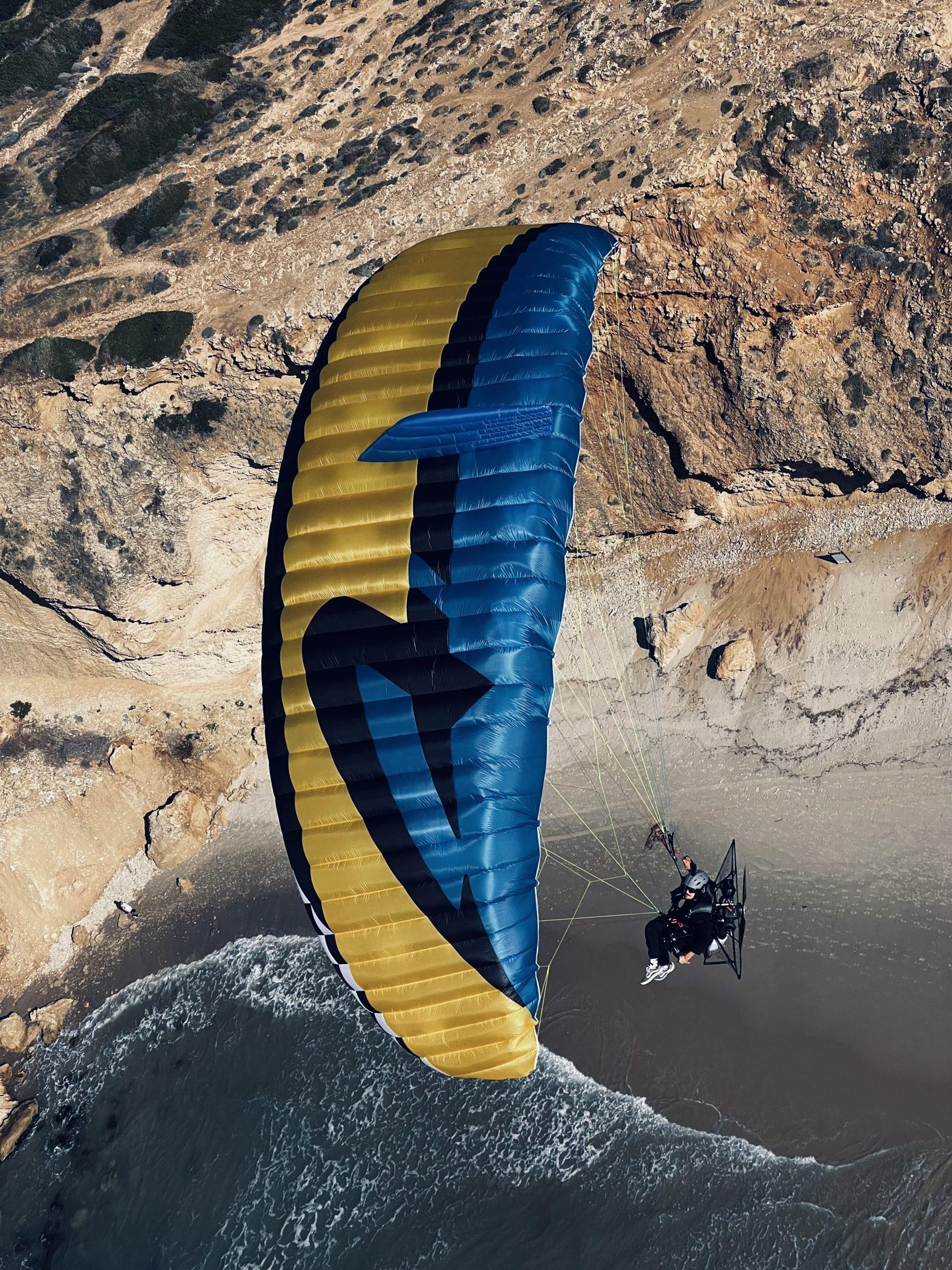
APCO F5 – paramotor wing by APCO Aviation in flightAPCO F5 – paramotor wing by APCO Aviation in flight (image 2)APCO F5 – paramotor wing by APCO Aviation in flight (image 3)APCO F5 – paramotor wing by APCO Aviation in flight (image 4)APCO F5 – paramotor wing by APCO Aviation in flight (image 5)APCO F5 – paramotor wing by APCO Aviation in flight (image 6)
DATA SHEET · APCO-AVIATION-F5-ENTRY-PARAMOTOR

APCO F5

The F5 is our entry-level reflex paramotor wing of the Formula Racing range (F1, F3, F5) — from basic schooling with School Risers up to long-distance XC, with high passive safety thanks to the Mohawk winglet. Certified to EN 926-1 with DGAC registration per size.

DGAC 3 Sizes
Datasheet

APCO F5 at a glance

Certification
EN-926-1 / DGAC
Sizes
25 · 27 · 29
All-up weight
75–165 kg
Area
25,7–29,1 m²
Cells
42–46
Canopy weight
4,7–5,3 kg
Speed
35–62 km/h
Min. sink
1,05 m/s
Colours
Red #5 · Surf #27 · Tropicana #49
Warranty
3 years / 250 Hours
Manual
Open PDF

Manufacturer data · Source

II · Highlights

Three reasons for APCO F5.

III · Sizes

Size chart.

Specifications per size for APCO F5 (3 sizes).
Datasheet 252729
Cells 424446
Area [m²] 25.727.429.1
Area (projected) [m²] 22.223.425.0
Span (incl. stabiliser) [m] 11.2211.8412.46
Span (projected) [m] 9.059.5510.07
Aspect ratio 4.95.05.2
Aspect ratio (projected) 3.84.04.2
Canopy weight [kg] 4.75.05.3
Certified weight range, free flight [kg] 70-10085-120110-140
Certified weight range, powered [kg] 75-120100-145125-165
Certified weight range, trike [kg] 140165175
V-min [km/h] 212121
V-trim [km/h] 35-3935-3935-39
V-trim open [km/h] 51-5351-5351-53
V-max [km/h] 626262
Min. sink at optimal wing loading [m/s] 1.051.051.05
Certification EN-926-1 / DGACEN-926-1 / DGACEN-926-1 / DGAC
Size

25

Cells
42
Area [m²]
25.7
Area (projected) [m²]
22.2
Span (incl. stabiliser) [m]
11.22
Span (projected) [m]
9.05
Aspect ratio
4.9
Aspect ratio (projected)
3.8
Canopy weight [kg]
4.7
Certified weight range, free flight [kg]
70-100
Certified weight range, powered [kg]
75-120
Certified weight range, trike [kg]
140
V-min [km/h]
21
V-trim [km/h]
35-39
V-trim open [km/h]
51-53
V-max [km/h]
62
Min. sink at optimal wing loading [m/s]
1.05
Certification
EN-926-1 / DGAC
Size

27

Cells
44
Area [m²]
27.4
Area (projected) [m²]
23.4
Span (incl. stabiliser) [m]
11.84
Span (projected) [m]
9.55
Aspect ratio
5.0
Aspect ratio (projected)
4.0
Canopy weight [kg]
5.0
Certified weight range, free flight [kg]
85-120
Certified weight range, powered [kg]
100-145
Certified weight range, trike [kg]
165
V-min [km/h]
21
V-trim [km/h]
35-39
V-trim open [km/h]
51-53
V-max [km/h]
62
Min. sink at optimal wing loading [m/s]
1.05
Certification
EN-926-1 / DGAC
Size

29

Cells
46
Area [m²]
29.1
Area (projected) [m²]
25.0
Span (incl. stabiliser) [m]
12.46
Span (projected) [m]
10.07
Aspect ratio
5.2
Aspect ratio (projected)
4.2
Canopy weight [kg]
5.3
Certified weight range, free flight [kg]
110-140
Certified weight range, powered [kg]
125-165
Certified weight range, trike [kg]
175
V-min [km/h]
21
V-trim [km/h]
35-39
V-trim open [km/h]
51-53
V-max [km/h]
62
Min. sink at optimal wing loading [m/s]
1.05
Certification
EN-926-1 / DGAC
IV · Material

Cloth and warranty.

Warranty
3 years / 250 hours
V · Lines

Line chart.

Line layout per position for APCO F5.
PositionMaterialLinesDiameter [mm]Strength [kg]
TopTopDyneemaUnsheathed1.090
Mid (a1:b1:c1:d1)Mid (a1:b1:c1:d1)VectranUnsheathed1.0153
Mid (**Brake;a3,5;b3,5;c;d)Mid (**Brake;a3,5;b3,5;c;d)VectranUnsheathed0.9115
Bottom (A3,5;B3,5)Bottom (A3,5;B3,5)Super AramidUnsheathed1.4254
Bottom (A1;B1)Bottom (A1;B1)Super AramidUnsheathed1.6325
Bottom (C; D; St)Bottom (C; D; St)SuperaramideUnsheathed1.0137
Brake Cascades; St topBrake Cascades; St topVectranUnsheathed0.650
Steering LineSteering LinePolyesterSheathed2.090
VI · Construction

About this model.

The F5 is designed for anything from basic schooling (with optional School Risers) up to long-distance XC flying.

Handling is much more direct and responsive than the predecessor model. Combined with the roll stability of the Mohawk winglet, this creates a precise, forgiving package with high passive safety.

Speed range: V-min 21 km/h, trim speed 35–39 km/h, trimmers open 51–53 km/h, V-max 62 km/h. Minimum sink below 1.05 m/s at optimal wing loading.

Construction: Hit Valves for high internal pressure at speed, embedded hook-up points for low drag, trailing-edge tensioners for a clean trailing edge, and a lighter bottom surface (27 g/m²) for easier launching — without compromising APCO's legendary durability.

Certification: EN 926-1 (load test) with DGAC registration for all three sizes (25, 27, 29). Per-size certificates are linked in the downloads section.

VI · Reviews

Pilots on video.

First-hand impressions straight from the air.

APCO F5 — Pilot Review
VIII · Downloads

Manuals and certificates.

IX · FAQ

Frequently asked questions about the APCO F5.

Which size fits my take-off weight?

The F5 comes in 25, 27 and 29 m². In powered flight the ranges are 75–120 kg (25), 100–145 kg (27) and 125–165 kg (29) — always all-up weight with motor, tank, harness and pilot. For free flight without motor the ranges are 70–100, 85–120 and 110–140 kg. On a trike the upper limits are 140, 165 and 175 kg. When choosing, count the tank full, not empty.

How is the F5 certified?

All three sizes carry DGAC registration and are load-tested to EN 926-1. Important context: EN 926-1 is the structural strength standard — proof that the construction carries the loads. It is not a flight-behaviour classification under EN 926-2, so there is no EN class A to D for this wing. That is the norm for reflex paramotor wings and no defect, but you should know it if you are looking for an EN class.

Who is the F5 intended for?

For getting into reflex paramotor wings, and for pilots who fly at the weekend rather than train — APCO explicitly mentions school use and weekend pilots. The wing is designed for passive safety: 42 to 46 cells, aspect ratio 4.9 to 5.2, slowest flight 21 km/h. That low aspect ratio is the reason for its forgiving behaviour; if you are after top speed, the F3 or F1 are the better fit.

What does the Mohawk winglet do?

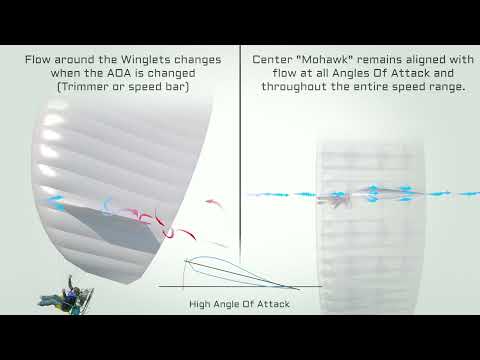
The Mohawk sits at the centre of the wing and stabilises the canopy along the roll axis. In practice this means less pitching in straight flight and calmer behaviour in active air — exactly where a beginner needs the calm. Added to that: 2D steering, tip-steering handles for course corrections without brake input, Flow Aligned Ribs, embedded hang points and HIT valves for inflating in light wind.

How fast does it fly and how heavy is it?

Slowest flight 21 km/h, trim 35–39 km/h, with trimmers open 51–53 km/h, maximum 62 km/h. Minimum sink is below 1.05 m/s. Canopy weight is 4.7 to 5.3 kg depending on size.

What warranty and which colours?

3 years or 250 flight hours — whichever comes first. Three colour options: Red (#5) with red-white top and red bottom surface, Surf (#27) with blue-white top and lime-green bottom, and Tropicana (#49) with yellow-green top and orange bottom.

X · Related

More paramotors.