
APCO Hybrid vs APCO Viva
The revolutionary hybrid profile or the classic EN-A — a lightweight B with near-EN-A test ratings versus the school standard.
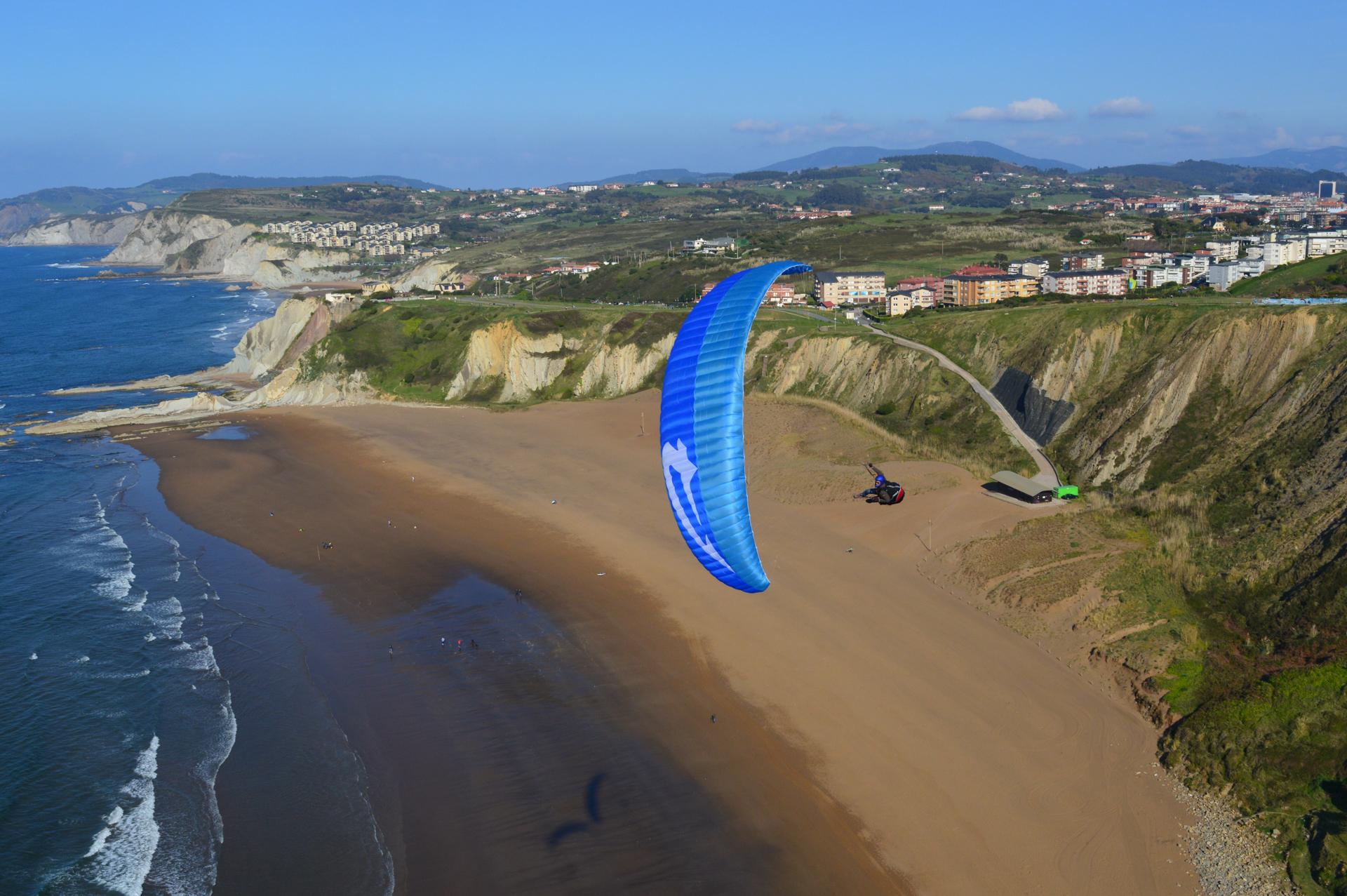
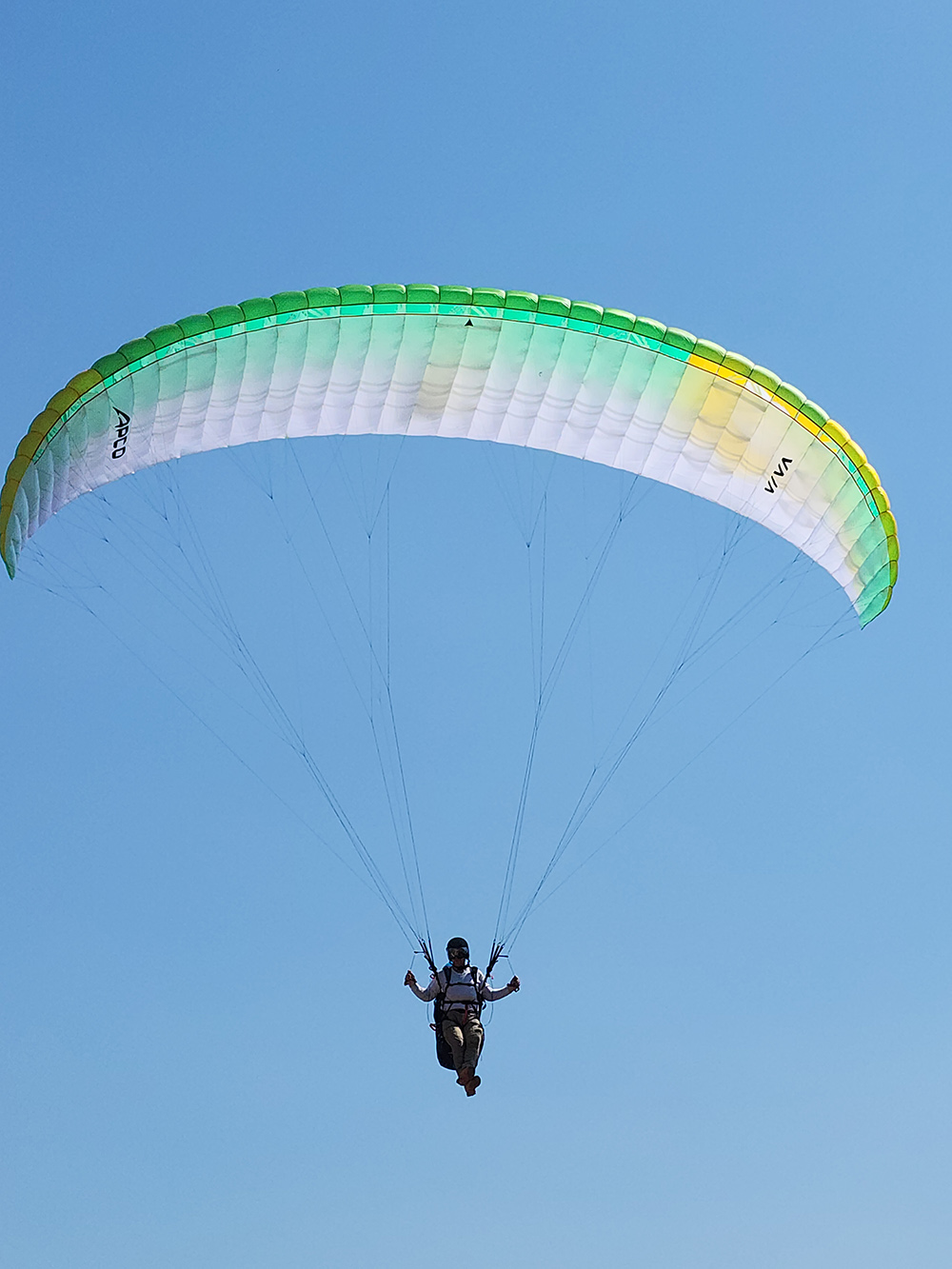
The Hybrid is, per APCO, the first wing of a new category: a hybrid profile of double and single surface, EN-B certified with all but two manoeuvres rated EN-A, canopy from 3.0 kg. The VIVA is APCO's new EN-A: 'designed for training all the way up to cross-country flights' with the Mohawk and the APP shark nose. Both from Caesarea.
Quick compare
| Criterion | APCO Hybrid Light | APCO Viva |
|---|---|---|
| Certification | EN-B / DGAC (all but 2 manoeuvres rated EN-A) | EN A |
| Construction | Hybrid profile (double + single surface) | Classic double surface |
| Cells | 48–50 | 36–40 |
| Area | 20 / 22 / 24 / 25.56 m² | 24.9 / 26.5 / 28.25 m² |
| Aspect ratio | 5.1–5.25 | 4.8 |
| Canopy weight | 3.0–3.25 kg | 4.2–4.7 kg |
| All-up weight (free) | 55–120 kg | 70–115 kg |
| All-up weight (+ paramotor) | 70–140 kg | 85–145 kg |
| V-min / V-trim / V-max | 22 / 35 / 45+ km/h | 23 / 38 / 50 km/h |
| Min. sink | — | 1.1 m/s |
| Profile technology | Hybrid profile | APP shark nose + Mohawk |
How APCO positions the two
- Hybrid — “a truly revolutionary glider design”: the first wing of a new category, combining a classic double-surface profile with a single-surface profile into the hybrid profile. “Certified in EN-B category, with all but 2 manoeuvres rated EN-A — indicating the real life safety of this unique design.” Light (3 kg), but per APCO not designed to be a lightweight wing — the missing bottom surface at the back saves weight and creates its special flying character.
- VIVA — the EN-A: “a solid, safe, confidence-inspiring wing … designed for training all the way up to cross-country flights”. With the Mohawk stabilizer, the APP shark nose (“zero deflations or momentary pressure drops”) and, per APCO, “by far our best thermalling EN A wing ever”.
What the Hybrid does differently
The hybrid profile omits the bottom surface at the back of the canopy — hence the 3.0–3.25 kg canopy weight, around a kilo or more below the VIVA (4.2–4.7 kg). Per APCO, the wing offers “many advantages over single skin designs and also classic wings in beginner to sport categories”. The test ratings speak for themselves: all but two manoeuvres rated EN-A — formally EN-B, though.
What the VIVA does differently
The VIVA is certified EN A in all three sizes — the class many countries require for flight schools. Per APCO, the 3-leg riser dramatically simplifies inflation, landing is “a breeze” and “incredibly stall resistant”, and with three sizes it covers 70–115 kg (free) and up to 145 kg with a paramotor. For countries requiring EN-A certification, per APCO also “an excellent choice as a beginner paramotor wing”.
Recommendation
Hybrid for pilots who want the lightest wing in the range (canopy from 3.0 kg) — per APCO with real-life safety close to EN-A and advantages over single skins as well as classic wings from beginner to sport categories.
To the APCO Hybrid Light →VIVA for training and the first seasons — per APCO 'the best option to learn the basics and build skills under a canopy with the highest safety level possible', first XC flights included.
To the APCO Viva →