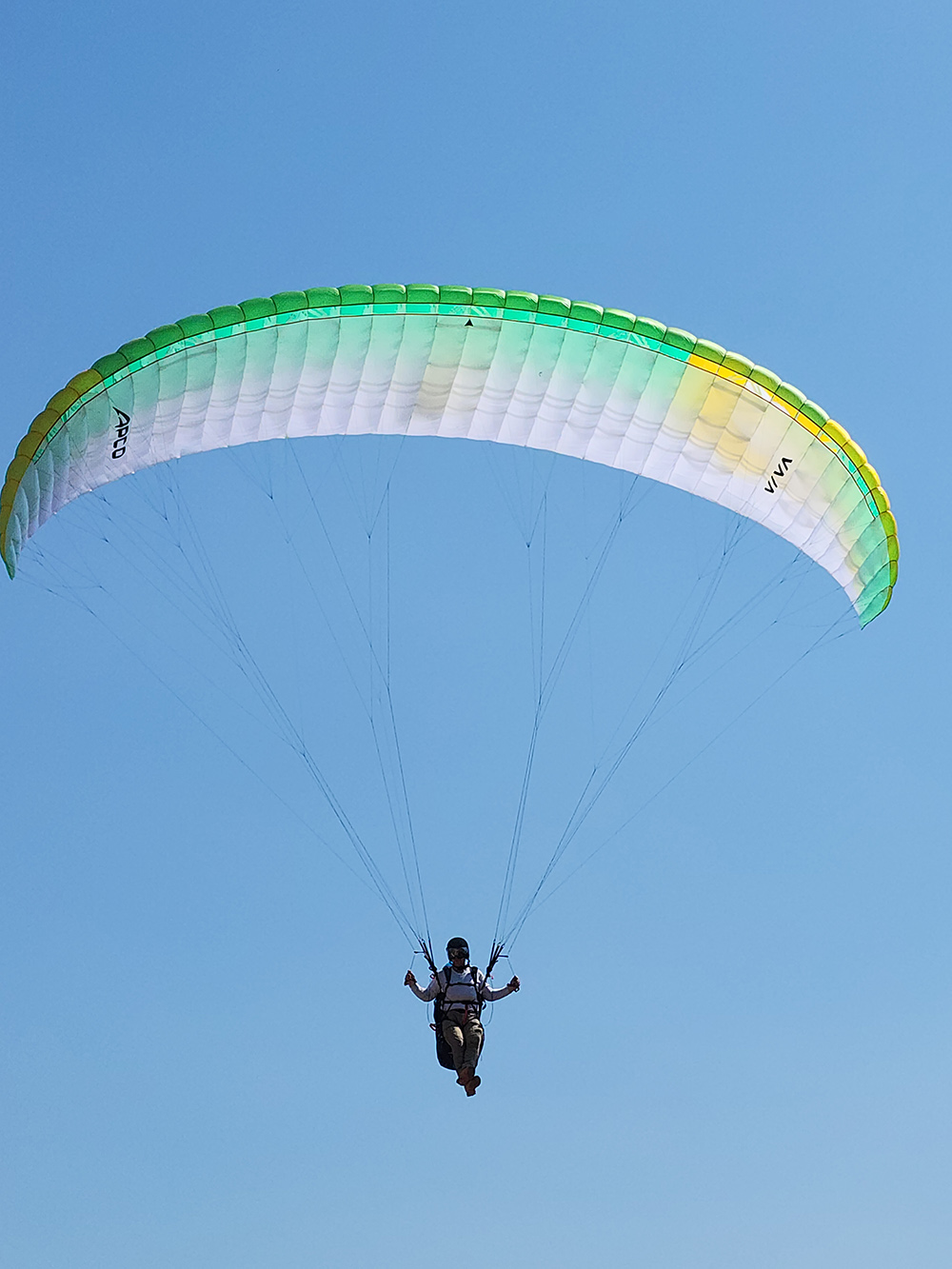
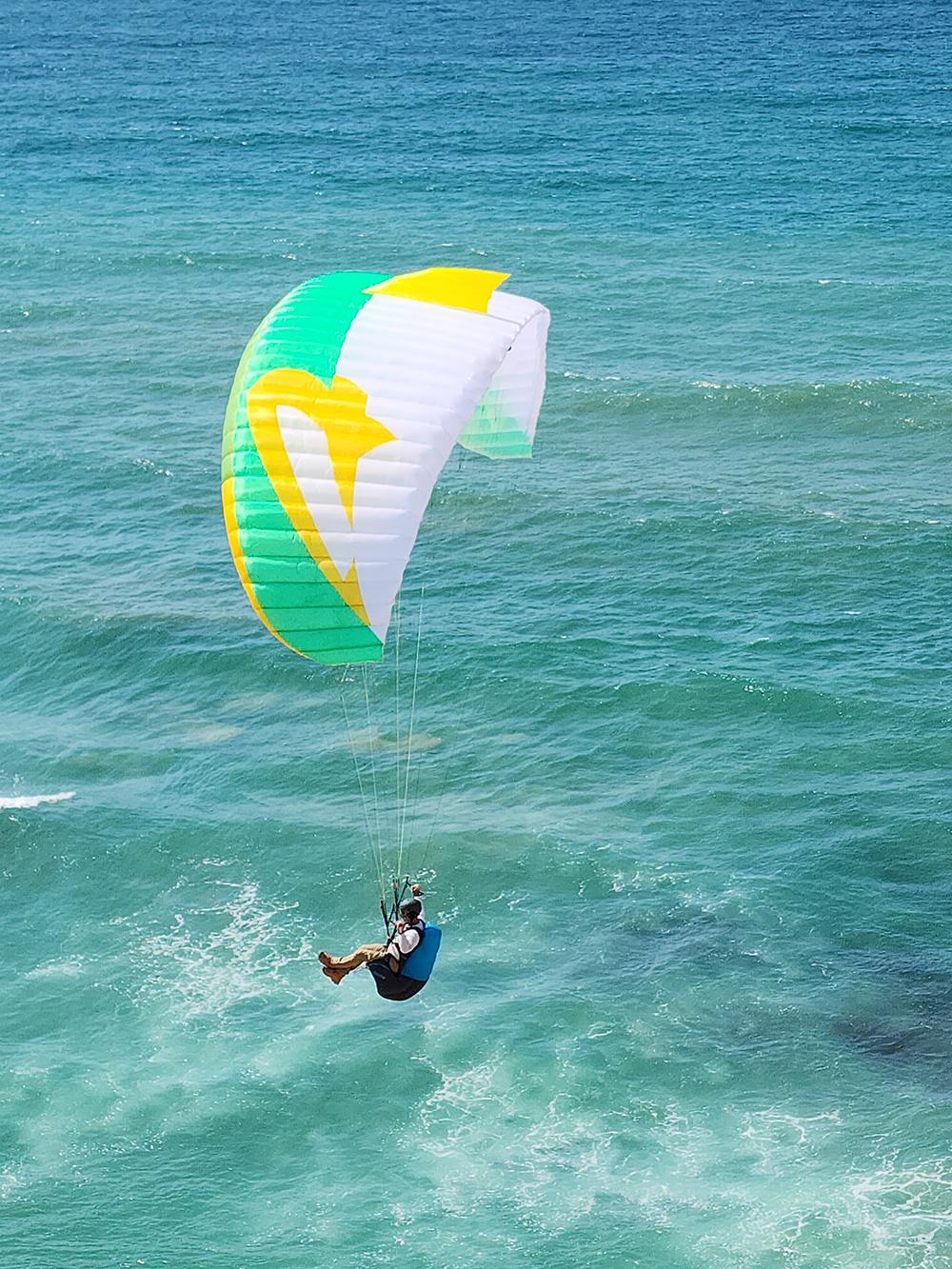
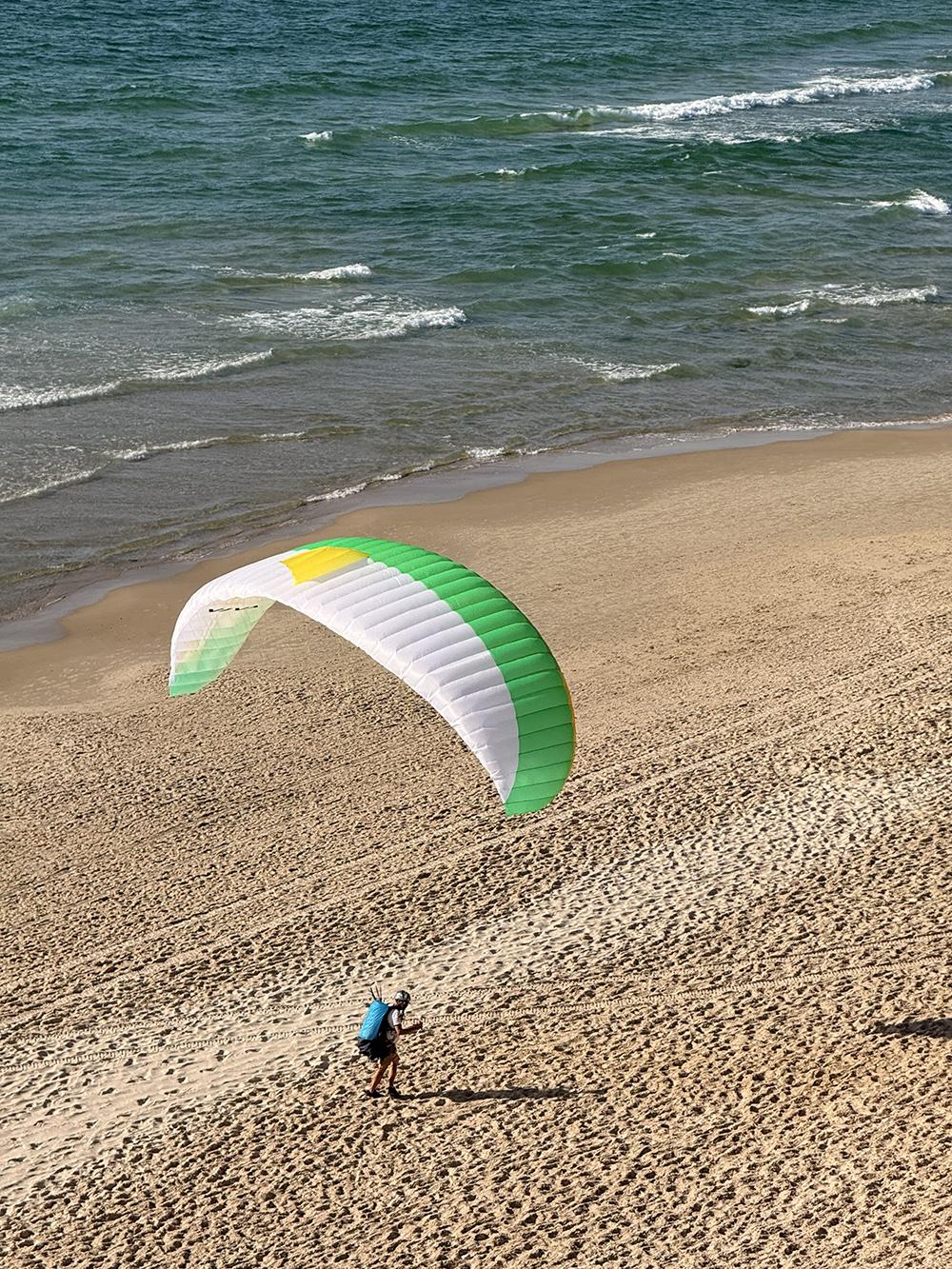
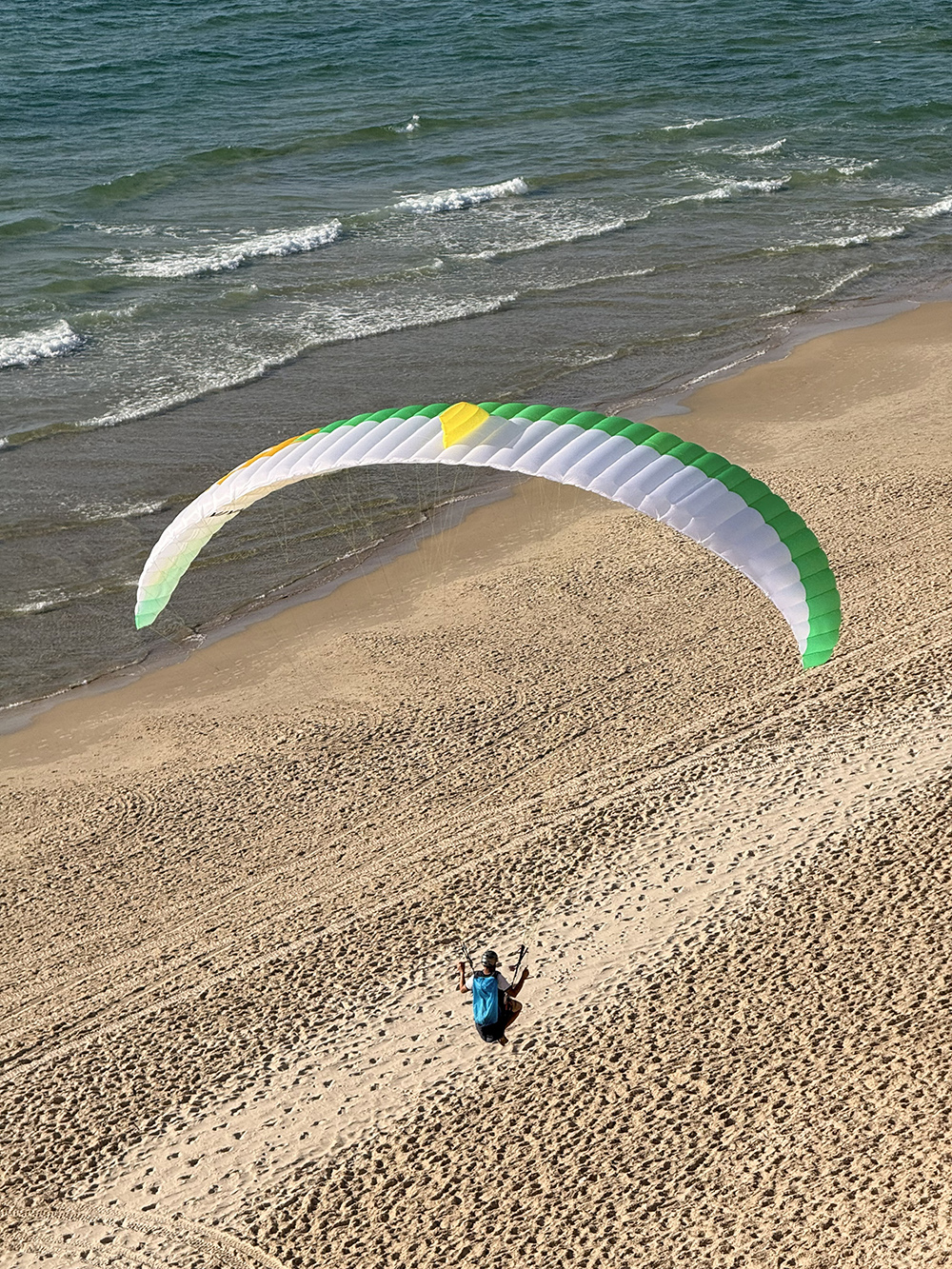
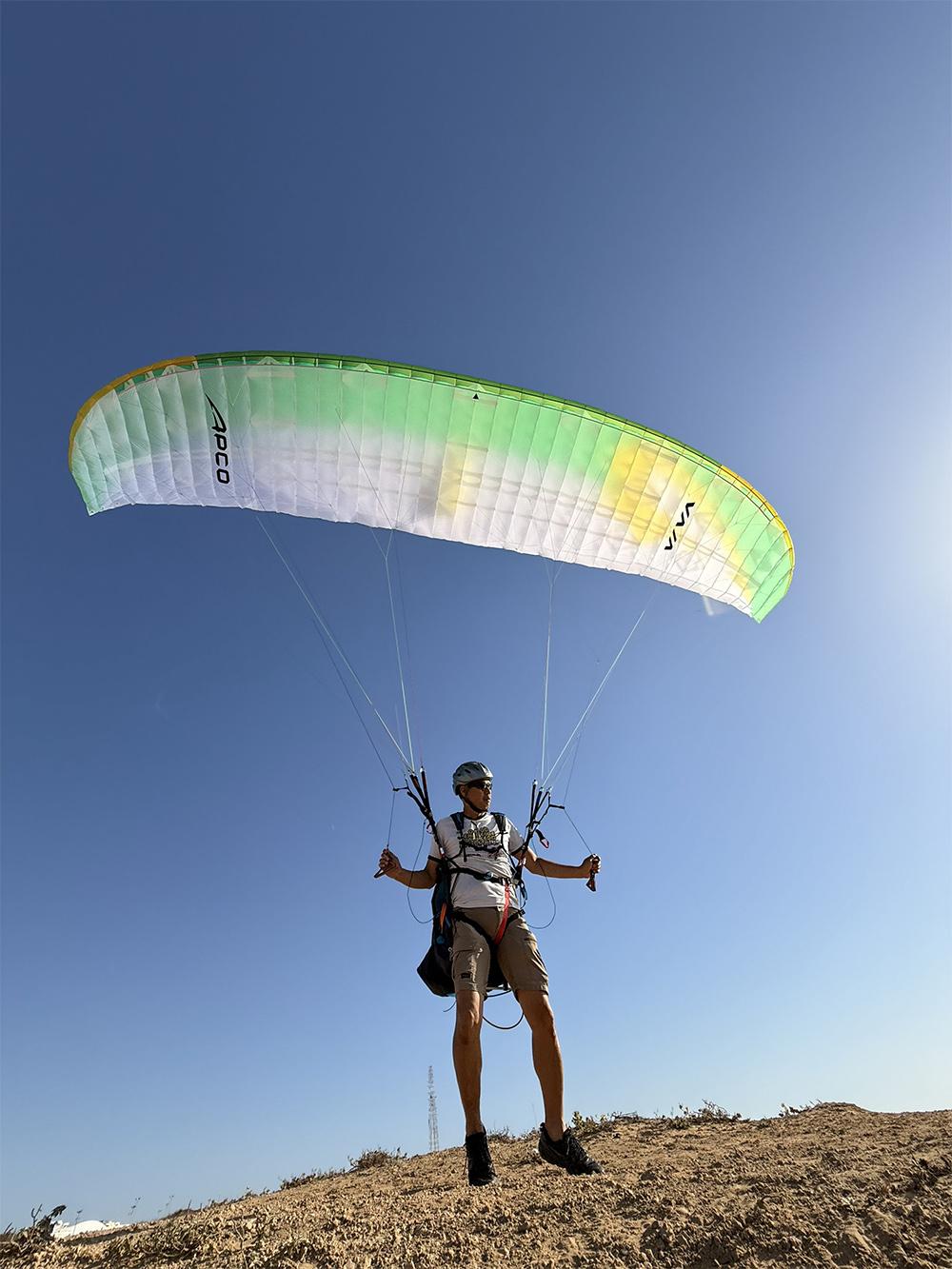
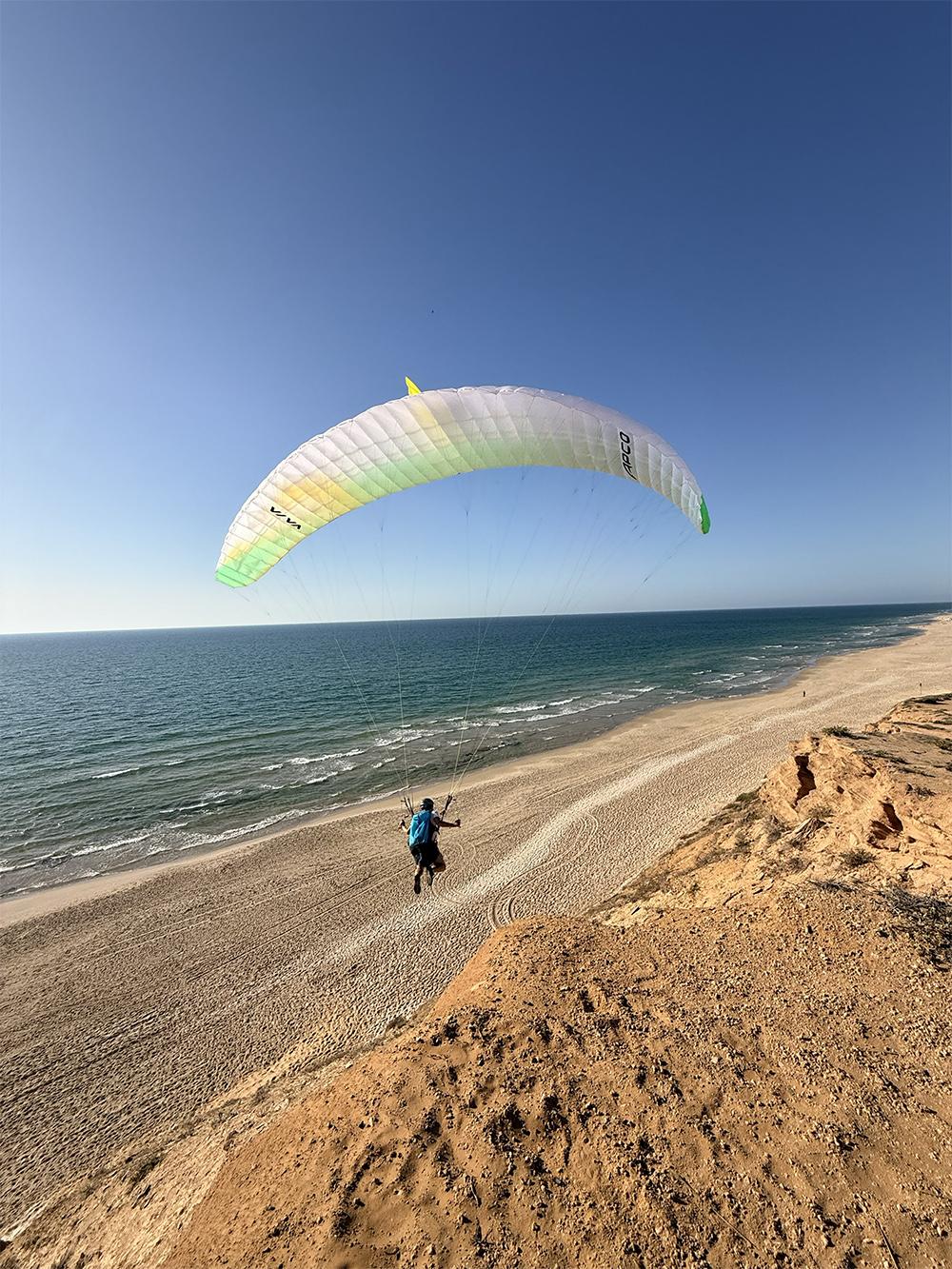
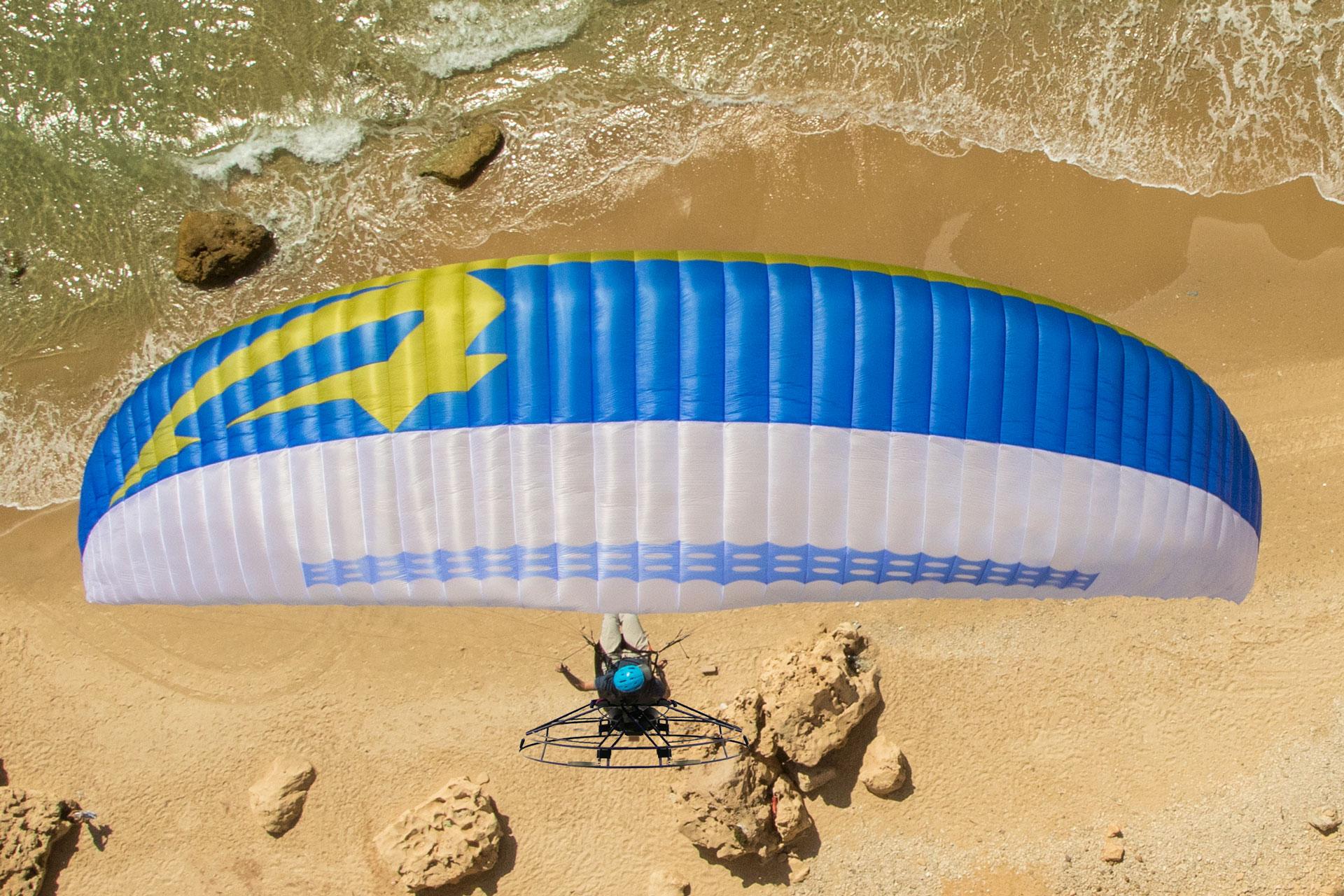
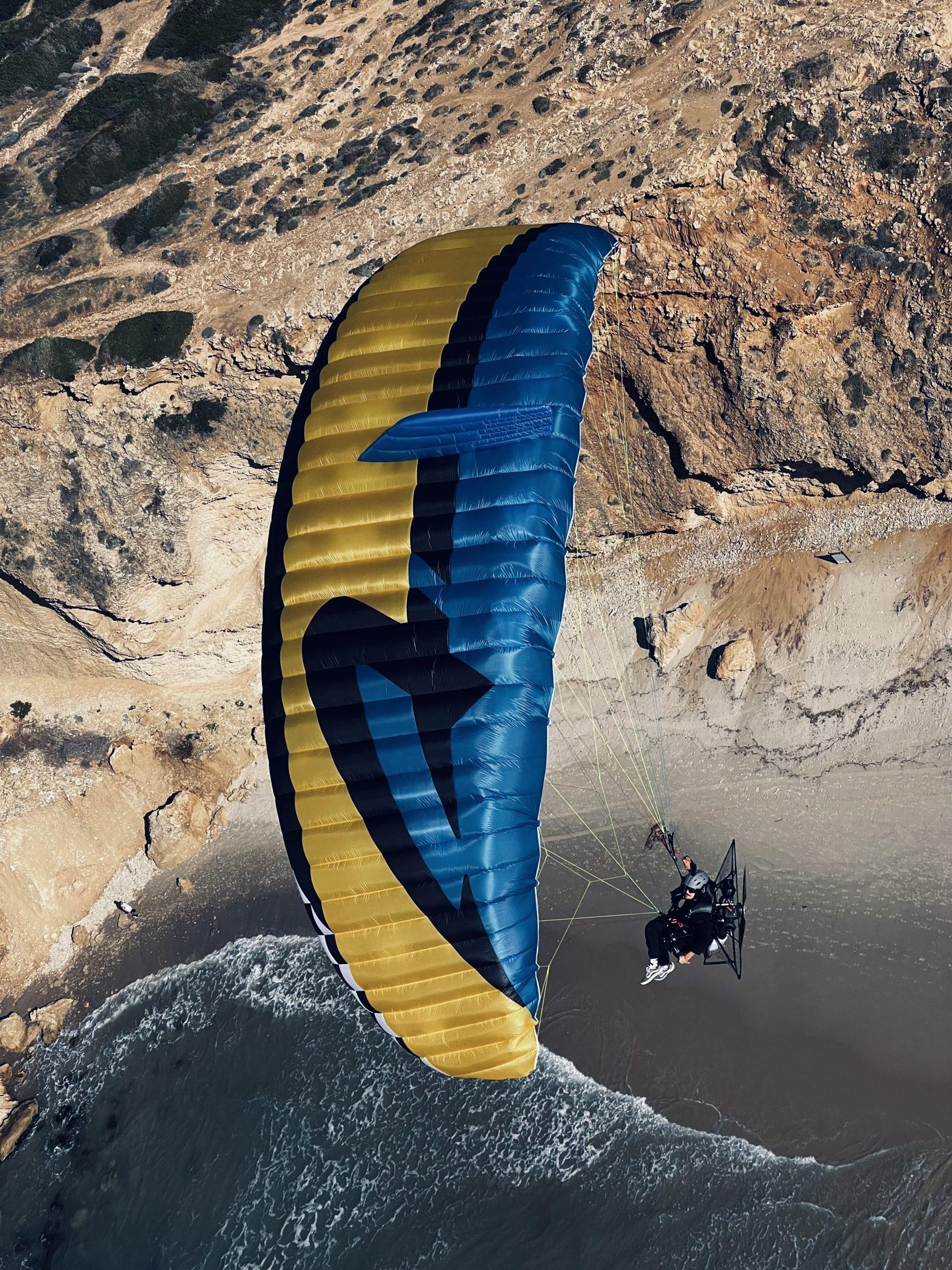
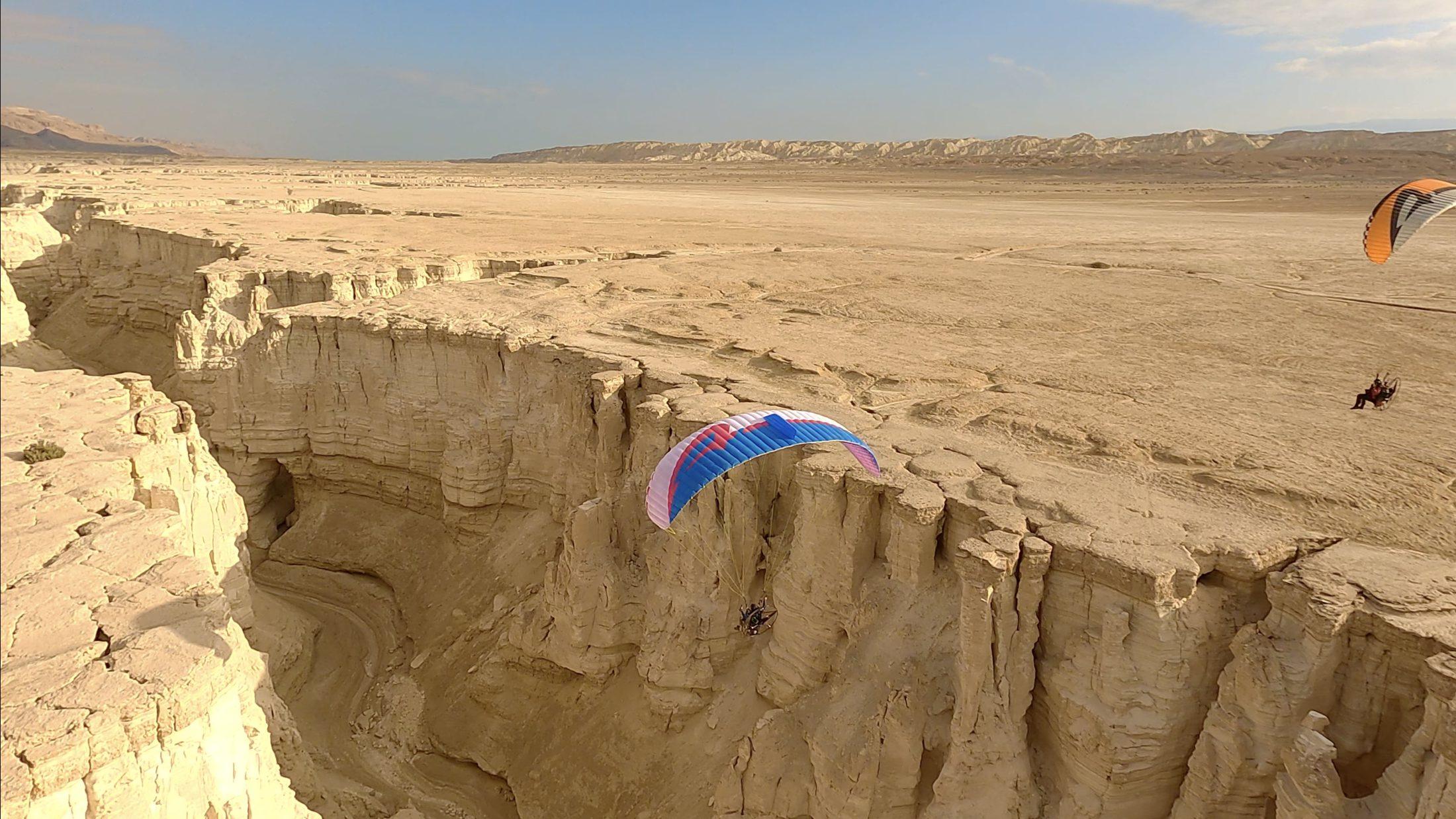
APCO Viva Paramotor – EN-A – in flight against a blue sky APCO Viva Paramotor – EN-A – canopy from above over turquoise sea APCO Viva Paramotor – EN-A – flying low over the sandy beach APCO Viva Paramotor – EN-A – turning over the beach APCO Viva Paramotor – EN-A – pilot inflating at take-off APCO Viva Paramotor – EN-A – soaring along the cliffs
DATA SHEET · APCO-VIVA-PARAMOTOR

APCO Viva Paramotor

Meet the Viva, a wing with a personality of its own. A solid, safe, confidence-inspiring wing which delivers the best of what this sport has to offer! Designed for training all the way up to cross-country flights, it is the best option to learn the basics and build skills under a canopy with the highest safety level possible.

EN A 3 Sizes
Datasheet

APCO Viva Paramotor at a glance

Certification
EN A
Sizes
Small · Medium · Large
All-up weight
85–145 kg
Area
24,90–28,25 m²
Cells
36–40
Canopy weight
4,2–4,7 kg
Speed
38–50 km/h
Min. sink
1,1 m/s
Colours
Winter #9 · Zest #12 · Forest #18
Warranty
3 years / 250 hours
Manual
Open PDF

Manufacturer data · Source

II · Highlights

Three reasons for APCO Viva Paramotor.

III · Sizes

Size chart.

Specifications per size for APCO Viva Paramotor (3 sizes).
Datasheet SmallMediumLarge
Cells 363840
Area [m²] 24.926.528.25
Area (projected) [m²] 20.922.323.7
Span (incl. stabiliser) [m] 10.611.312.0
Span (projected) [m] 8.28.79.3
Aspect ratio 4.84.84.8
Aspect ratio (projected) 3.223.403.65
Pilot weight (all-up) free flight [kg] 70-9080-10090-115
Pilot weight (all-up + paramotor unit) [kg] 85-11090-135120-145
Canopy weight [kg] 4.24.44.7
Root Cord m 2.702.853.05
Tip chord [m] 0.650.6750.7
Length of lines on B [m] 6.16.56.9
Total length of lines [m] 290305325
Size

Small

Cells
36
Area [m²]
24.9
Area (projected) [m²]
20.9
Span (incl. stabiliser) [m]
10.6
Span (projected) [m]
8.2
Aspect ratio
4.8
Aspect ratio (projected)
3.22
Pilot weight (all-up) free flight [kg]
70-90
Pilot weight (all-up + paramotor unit) [kg]
85-110
Canopy weight [kg]
4.2
Root Cord m
2.70
Tip chord [m]
0.65
Length of lines on B [m]
6.1
Total length of lines [m]
290
Size

Medium

Cells
38
Area [m²]
26.5
Area (projected) [m²]
22.3
Span (incl. stabiliser) [m]
11.3
Span (projected) [m]
8.7
Aspect ratio
4.8
Aspect ratio (projected)
3.40
Pilot weight (all-up) free flight [kg]
80-100
Pilot weight (all-up + paramotor unit) [kg]
90-135
Canopy weight [kg]
4.4
Root Cord m
2.85
Tip chord [m]
0.675
Length of lines on B [m]
6.5
Total length of lines [m]
305
Size

Large

Cells
40
Area [m²]
28.25
Area (projected) [m²]
23.7
Span (incl. stabiliser) [m]
12.0
Span (projected) [m]
9.3
Aspect ratio
4.8
Aspect ratio (projected)
3.65
Pilot weight (all-up) free flight [kg]
90-115
Pilot weight (all-up + paramotor unit) [kg]
120-145
Canopy weight [kg]
4.7
Root Cord m
3.05
Tip chord [m]
0.7
Length of lines on B [m]
6.9
Total length of lines [m]
325
IV · Material

Cloth and warranty.

Sail cloth
"Zero Porosity" ripstop nylon (PU coated + siliconised)
Warranty
3 years / 250 hours
V · Lines

Line chart.

Line layout per position for APCO Viva Paramotor.
Position MaterialDiameter [mm]Strength [kg]
Top, Br Top, St Top Dyneema1.190
Mid, St Aramid1.2120
Bottom A1;B1 Aramid2.1360
Bottom A2; C1; B2 Aramid1.9320
Brake main Dyneema2.0190
VI · Construction

About this model.

Viva Paramotor: supplied with a dedicated set of risers including trimmers, the Viva is thoroughly tested with paramotor. Its lightweight construction is especially valuable on nil wind days, making forward launches effortless. For countries requiring EN A certification, it is an excellent choice as a beginner paramotor wing.

For some countries EN A certification is still mandatory for schools. Viva has this certification, which cannot be obtained on reflex wings.

The addition of the APCO Mohawk allowed us to tune the wing to be even more agile and efficient in sharp maneuvers. The Mohawk serves as a rudder which improves both roll stability and safety in spirals with a faster, smoother autonomous exit.

Flow Aligned Ribs (FAR), morphing direction from center to tip, align the ribs with the natural direction of the flow, increasing both performance and stability throughout the speed range. The canopy incorporates two functional 3D cuts for the best possible leading edge shape definition, and its sail tension has been optimized to be a homogeneous unit, solid and reassuring in flight.

Take-off: effortless and intuitive. The Mohawk-based platform combined with Viva's clean and simple 3-leg riser dramatically simplifies inflation for the beginner. Front launch or reverse is always easy – the wing rises slowly and controllably overhead, giving you time to glance up and take off safely. Nil wind forward launches have never been easier.

Landing: a breeze. The Viva is incredibly stall resistant and flaring will slow you down almost to a standstill. Thermalling: the glider banks into a coordinated turn and pulls itself into the core almost automatically – among the best thermalling behaviour available in an EN A wing.

Performance: glide at trim speed is among the best in class; through its entire acceleration range the Viva efficiently cuts through the air with minimal sink rate. Pilot feedback: reassuring and precise – forgiving for beginners and, when directed correctly, responding immediately without hesitation.

Construction: light cloth is used intelligently on internal construction and the bottom surface, while the top surface retains APCO's legendary durable cloth – weight saving without sacrificing the lifespan of the glider. The APP Sharknose profile increases and retains internal pressure across the entire speed range, with zero deflations or momentary pressure drops.

At FlyApco, the Viva takes the place of the Karisma II.

VIII · Downloads

Manuals and certificates.

IX · FAQ

Frequently asked questions about the APCO Viva Paramotor.

Who is the Viva designed for?

The Viva is an EN-A paraglider designed for beginner to intermediate pilots. It combines easy handling, predictable behaviour and reassuring passive safety, making it suitable for learning and continued progression.

Is the Viva available as a paramotor wing?

Yes. A dedicated EN-A paramotor version is available, with dedicated paramotor risers and trimmers. It is designed for paramotor schools and pilots looking for easy handling and short ground runs, including in nil-wind conditions.

Can I learn to fly on the Viva?

Yes. The Viva is specifically designed as a teaching and progression wing. Its forgiving take-off and landing characteristics, stall resistance and clear pilot feedback make it well suited to flight training under the guidance of a qualified instructor.

How many flying hours do I need before flying the Viva?

There is no specific minimum number of flying hours prescribed for the Viva. The appropriate level of experience depends on the pilot, their training progress and the requirements of their instructor and local flying regulations.

Is the Viva suitable for experienced pilots?

Yes. Although designed with beginners in mind, the Viva offers efficient thermalling, good glide performance and responsive handling, making it suitable for pilots who want a safe and enjoyable wing for continued progression and recreational flying.

Which size fits?

Three sizes S, M, L with 70–90 / 80–100 / 90–115 kg all-up weight in free flight and 85–110 / 90–135 / 120–145 kg with a paramotor unit; all three sizes are certified EN A.

X · Related

More paramotors.