
APCO F3 vs APCO F1
Sport class or speed machine — both full reflex, but built for different pilots.
The F3 MKII is APCO's sport-class XC paramotor wing — derived from the F1 — the little brother of the F1, lighter, easier to fly, the upgrade after the school wing. The F1 MKII is the high-end XC and competition reflex for experienced pilots: aspect ratio 6.6, 64 cells, up to 80 km/h. Both DGAC-certified, both made in Caesarea.
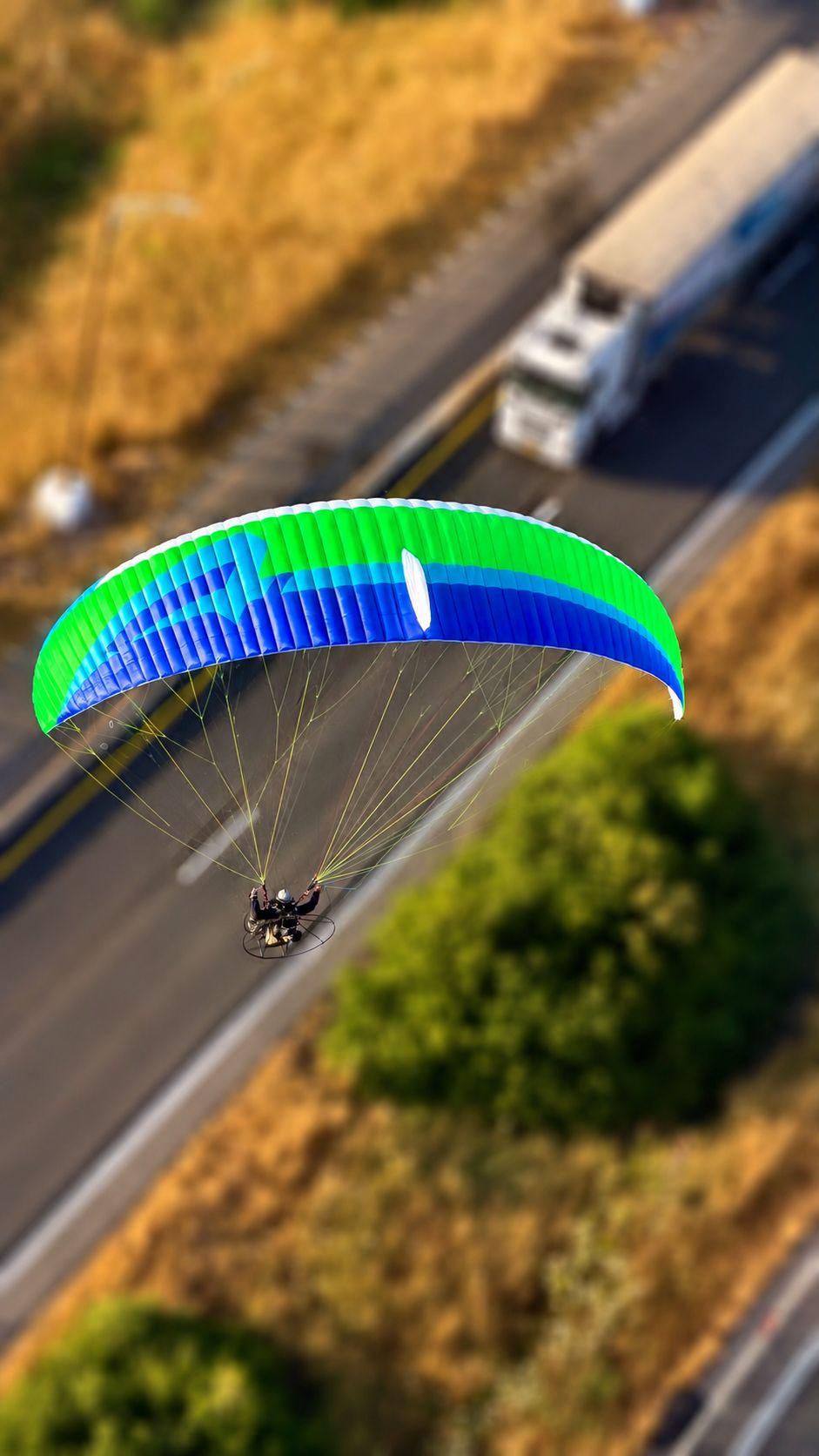
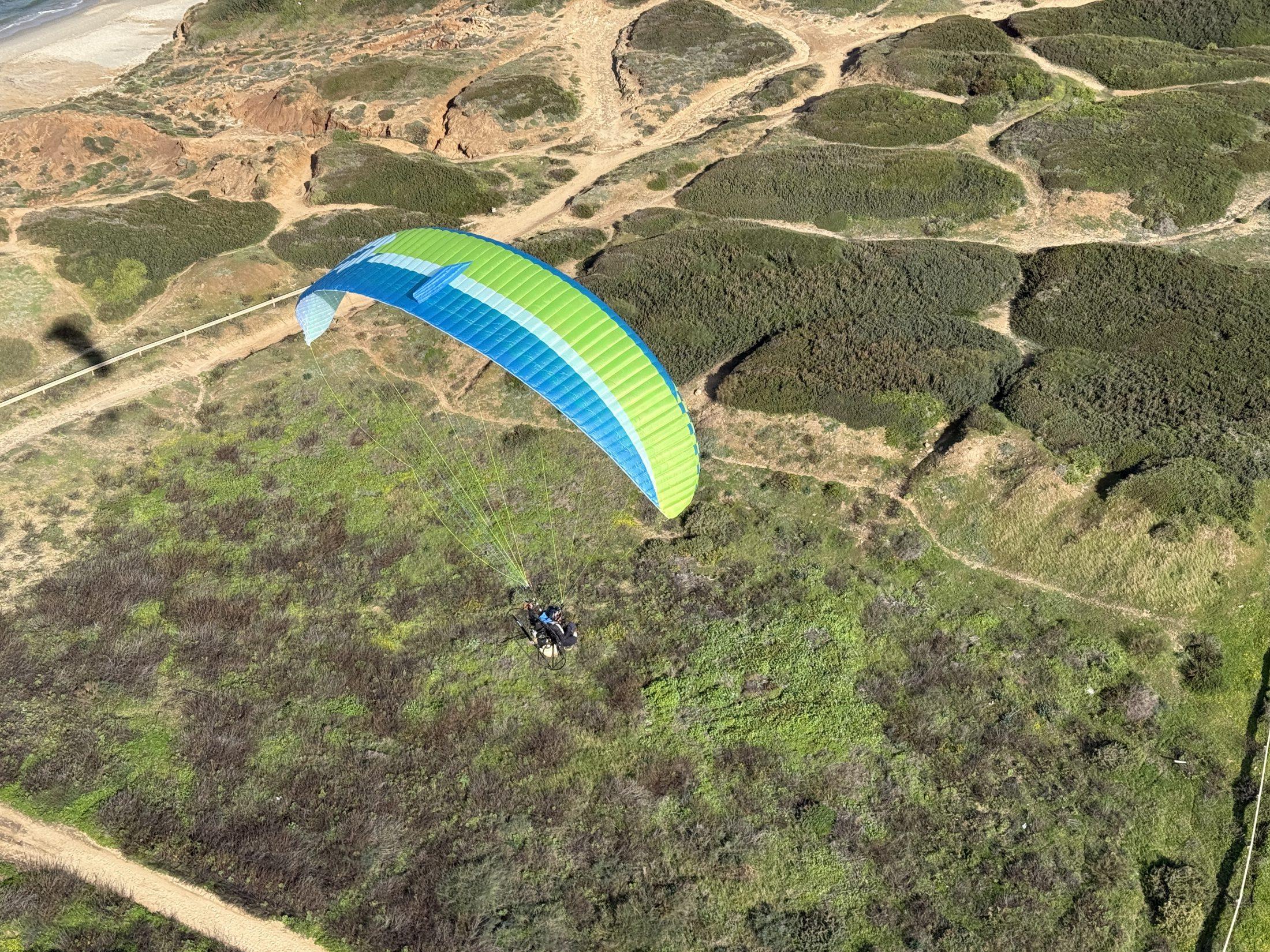
Quick compare
| Criterion | APCO F3 MKII | APCO F1 MKII |
|---|---|---|
| Certification | DGAC | DGAC |
| Position (manufacturer) | Sport-class XC (little brother of the F1) | High-end XC / competition |
| Sizes | 22 / 24 / 26 m² | 18 / 20 / 22 m² |
| Cells | 56–60 | 64 |
| Aspect ratio (flat) | 5.77–6.23 | 6.6 |
| V-trim open | 50–56 km/h | 55–59 km/h |
| V-min | 25 km/h | 27 km/h |
| V-max | 69 km/h | 80 km/h |
| Trimmer gain | approx. 10 km/h | approx. 15 km/h |
| All-up weight, paramotor | 70–100/120/140 kg | 70–100/120/140 kg |
| All-up weight, trike | up to 165 kg | up to 165 kg |
| Canopy weight | 4.35–5.05 kg | 3.9–4.6 kg |
How APCO positions the two
The classification comes directly from the manufacturer:
- F3 MKII — “APCO’s Sport Class cross country paramotor wing”. Derived from the F1, the little brother of the F1. It sits above the F5 and below the F1 and is, per APCO, “the perfect upgrade for pilots looking to move up from their school wing”.
- F1 MKII — “The Fast One”. APCO’s top reflex for classic competitions and ambitious XC: “a precision tool that in the right hands will produce incomparable results”, intended for experienced pilots.
Both are full-reflex wings with DGAC certification, made in Caesarea.
What the F3 does differently
Per APCO, the F3 is a very light wing — lightweight materials on all internal parts and the bottom surface, APCO’s long-lasting fabric on the top surface. That delivers:
- very easy inflation, especially in nil-wind take-offs
- less inertia and thus higher passive safety
- more relaxed cruising, plus slower take-offs and landings
APCO explicitly names advanced pilots who do not need the F1’s cutting-edge performance as part of the target group.
What the F1 does differently
The F1 combines a high aspect ratio (6.6) with a full reflex profile. Highlighted by the manufacturer:
- Flow Aligned Ribs (FAR) — ribs aligned with the natural flow direction for performance and stability across the speed range
- OAA speed system — accelerate to the maximum in one swift motion
- up to approx. 80 km/h on the speed bar; trimmers alone add approx. 15 km/h
- with trimmers closed, good thermalling and, per APCO, an “exceptional glide ratio” for a full reflex wing
Trike
Per the datasheets, both wings are approved for paratrike operation, with an extended all-up weight of up to 165 kg (size 26 and 22 respectively). The matching trike harnesses are the Trike Pilot Harness and the Trike Passenger Harness.
Material and warranty
Both use APCO’s long-lasting fabric (top surface) and carry the APCO warranty of 3 years / 250 flight hours.
Recommendation
F3 for the step up after the school wing and for pilots who want XC performance with easy handling and very light inflation — per APCO also for advanced pilots who do not need the F1's maximum.
To the APCO F3 MKII →F1 for experienced pilots with competition or distance ambitions — APCO's fastest reflex ('The Fast One') with FAR ribs and the OAA speed system.
To the APCO F1 MKII →