
Compare · After the licence — stay on the school reflex or move to sport class?
APCO F5 vs APCO F3
School reflex or sport class — the natural first step up in APCO's reflex line.
The F5 is APCO's beginner-to-intermediate reflex with the Mohawk — from schooling to XC. The F3 MKII is the sport class above it ('Baby F1'): per APCO 'the perfect upgrade for pilots looking to move up from their school wing', with a V-max of 69 km/h and trike approval up to 165 kg. Both DGAC-certified.
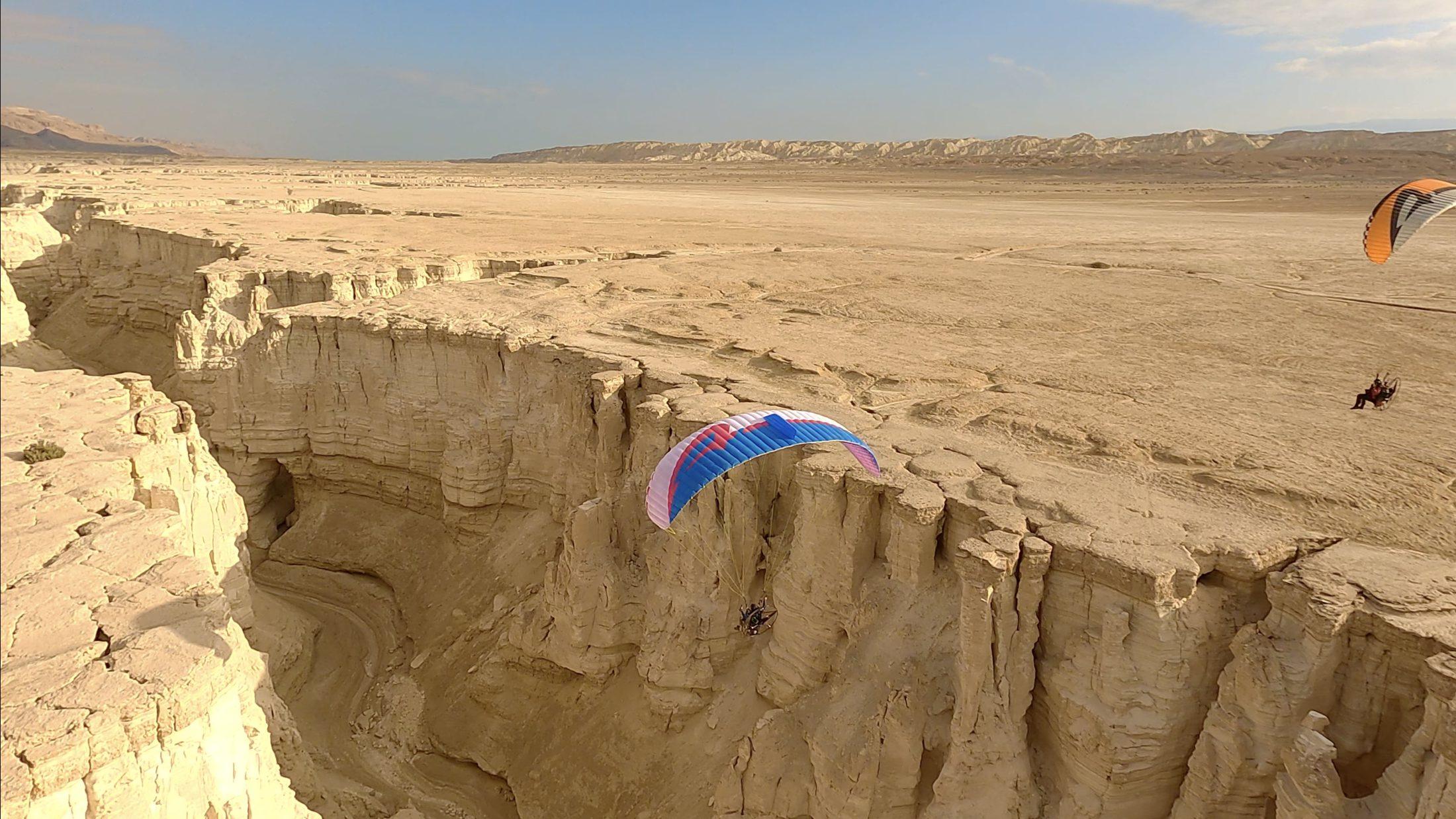
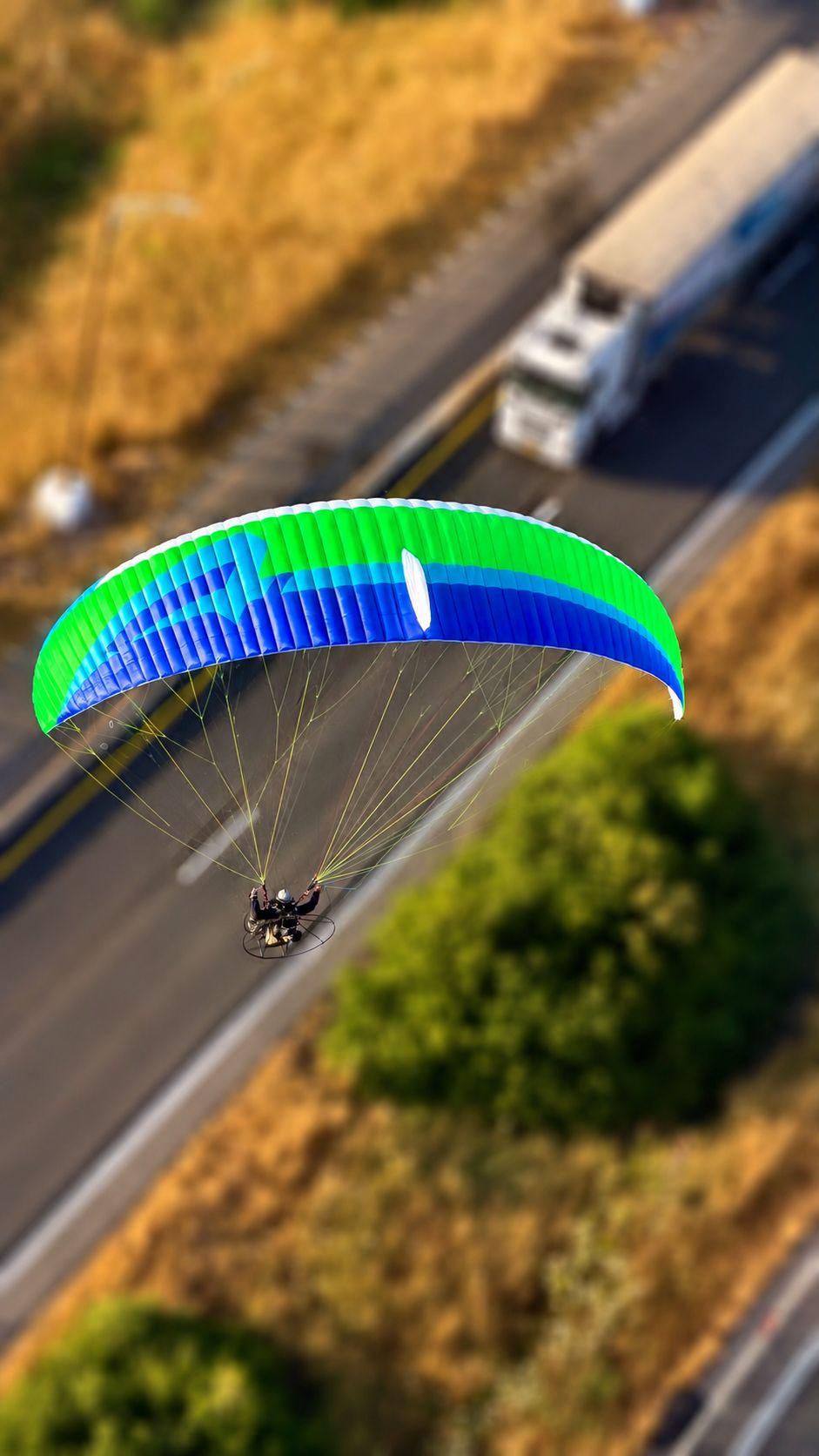
Quick compare
| Criterion | APCO F5 | APCO F3 MKII |
|---|---|---|
| Certification | DGAC | DGAC |
| Position (manufacturer) | Beginner to intermediate, up to XC | Sport-class XC (little brother of the F1) |
| Cells | 42 / 44 / 46 | 56 / 58 / 60 |
| Area | 25.7 / 27.4 / 29.1 m² | 22.6 / 24 / 25.4 m² |
| Aspect ratio | 4.9–5.2 | 5.77–6.23 |
| Canopy weight | 4.7 / 5.0 / 5.3 kg | 4.35 / 4.60 / 5.05 kg |
| All-up weight, paramotor | see datasheet per size | 70–100 / 70–120 / 70–140 kg |
| All-up weight, trike | — | up to 165 kg |
| V-trim | 35–39 km/h (open 51–53) | 36–40 (closed) / 50–56 km/h (open) |
| V-min | 21 km/h | 25 km/h |
| V-max | 62 km/h | 69 km/h |
| Trimmer gain | — | approx. 10 km/h |
How APCO positions the two
- F5 — “a new breed of beginner to intermediate paramotor wing”: “designed for anything from basic schooling (School Risers) up to long distance XC flying”. With the Mohawk stabiliser introduced on the F5.
- F3 MKII — “APCO’s Sport Class cross country paramotor wing”, the little brother of the F1. It sits above the F5 and below the F1 and is, per APCO, “the perfect upgrade for pilots looking to move up from their school wing”. Per the manufacturer a very light wing, with correspondingly easy inflation, especially in nil wind.
What the F5 does differently
- Mohawk: roll oscillations settle, per APCO, “fast and completely independently” — which allowed a more direct brake tuning.
- Trimmer focus: as much additional speed as possible without the speed bar — “a real advantage for pilots that choose not to use speed bar”.
- School Risers as an option; the school version is available separately.
What the F3 does differently
- Sport-class design: derived from the F1 — “delivers a similar performance package in a more manageable and easy to fly wing with incomparable safety and stability”.
- Lightweight build: light materials inside and on the bottom surface, APCO’s long-lasting fabric on top — less inertia and, per APCO, higher passive safety.
- For whom, per APCO: pilots moving up from the school wing and advanced pilots “who do not need the cutting edge performance and speed offered by the F1 and enjoy more relaxed cruising around and slower take-off and landings”.
- Trike approval up to 165 kg (size 26).
Recommendation
When APCO F5?
F5 for schooling and the first seasons — Mohawk stabilisation, trimmer speed without needing the speed bar, optional School Risers.
To the APCO F5 → When APCO F3 MKII?
F3 as the step up APCO intends — 'the perfect upgrade for pilots looking to move up from their school wing', with noticeably more aspect ratio, speed and the trike option.
To the APCO F3 MKII →